

By Li Yuan
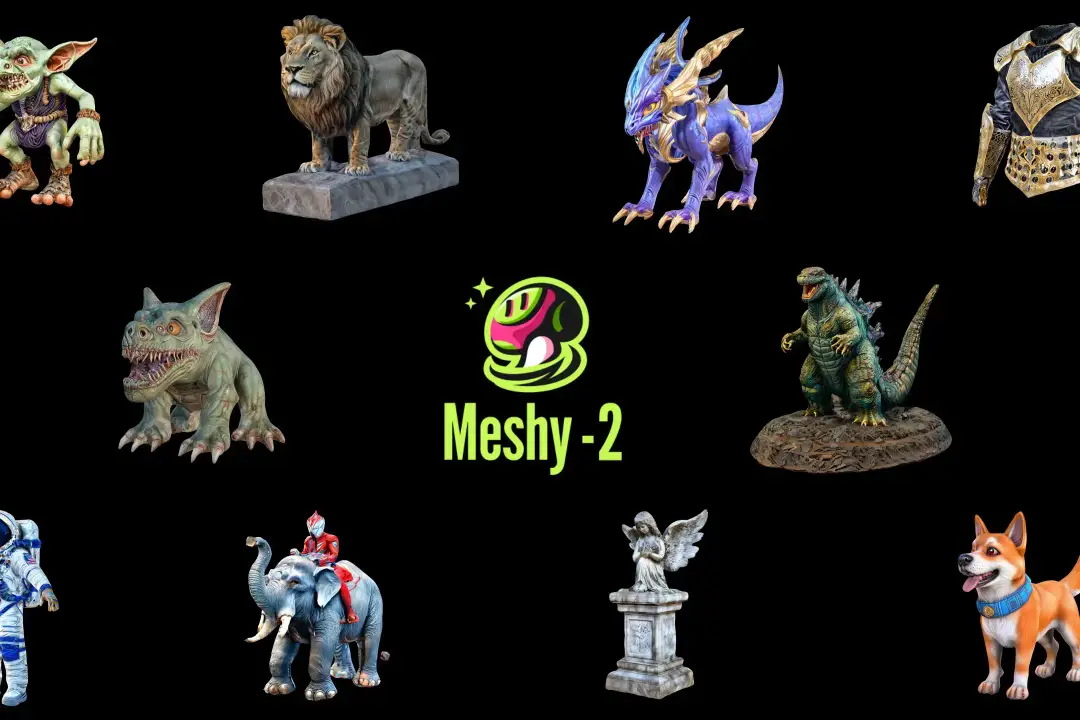
When generative AI rewrote text, images and video in rapid succession, 3D content looked like the next frontier. Few stories illustrate that shift as clearly as that of Hu Yuanming, a Tsinghua- and MIT-trained computer graphics specialist whose start-up, Meshy, has emerged as an early leader in AI-generated 3D assets.
Hu’s path initially followed a familiar script for elite engineers. A graduate of Tsinghua’s prestigious “Yao Class” and later a PhD at MIT, he built a reputation in high-performance computing and graphics. His programming language Taichi attracted more than 27,000 stars on GitHub and a strong following among developers. By conventional standards, that pedigree should have been enough.
Entrepreneurship, however, imposed a harsher metric: technical excellence does not guarantee commercial success.
After founding Taichi Graphics following his doctorate, Hu and his team attempted to commercialise their core technology. They experimented with rendering engines and 3D tools, pivoting twice in 18 months. Each iteration refined the product but failed to unlock meaningful demand. Feedback from users proved blunt. While the team had invested heavily in polishing software, customers signalled they would not pay for it—though they might pay a small fee for the 3D models themselves.
That rejection proved pivotal. By 2022, large language models such as ChatGPT had brought AI-generated text into the mainstream, while tools like Stable Diffusion and Runway were pushing forward image and video generation. If content across media was being redefined, Hu reasoned, 3D assets might follow. Crucially, if users valued outputs rather than tools, the product itself needed rethinking.
The decision to pivot was swift. Within hours of an internal discussion, the team had launched an early version of what would become Meshy, focused squarely on generating 3D assets.
The bet paid off. Meshy says its annual recurring revenue (ARR) has reached more than $40 million this year, with monthly revenue growth of roughly 30%. The platform claims 10 million registered users globally and more than 60% market share in the US and Europe.
More broadly, its trajectory suggests that AI-generated 3D content is beginning to find commercial footing—and may represent the next phase of generative AI.
Finding product-market fit in unlikely places
Meshy’s eventual success could give the impression of a smooth transition. In reality, its early product was rudimentary. Initial models were generated by stitching together multiple 2D views into a 3D structure, often producing distorted outputs dubbed “four-faced monsters” by users.
Criticism was immediate. Some users remarked they would rather rebuild models from scratch than use the tool. Yet this imperfect product marked a turning point. Instead of striving for technical perfection before launch, Hu’s team reversed their approach: release something usable quickly, then iterate.
Unexpectedly, the first viable use case emerged in horror games, a genre of video game. While such games do not always require precise or highly polished models, they do demand unsettling and uncanny visuals. The distorted outputs, far from being a drawback, proved fit for purpose.
This early product-market fit highlighted a broader pattern. AI-generated 3D would not initially replace professional modelling workflows or meet AAA production standards. Instead, it would gain traction in areas where speed and cost mattered more than perfection.
Game development offered fertile ground. Developers could use AI-generated assets for prototyping, environmental elements or non-player characters—areas characterised by high volume and lower individual value. Over time, Meshy expanded into adjacent use cases including indie games, 3D printing and education.
Growth driven by product, not promotion
Meshy’s growth profile sets it apart from many AI start-ups that rely heavily on marketing spend. The company reported a 14-fold growth in revenue in 2025, with ARR now running at $40 million. Monthly growth has remained between 20% and 30%, with more than half of new users arriving organically and a lifetime value to customer acquisition cost ratio above four.
This reflects a deliberate strategy. Rather than pursuing scale through aggressive spending, Hu has emphasised product-led growth — using technical improvements and brand credibility to attract users.
The release of Meshy’s sixth-generation model marked a key inflection point. Improvements in geometry, detail and rendering realism — along with reducing generation times to under a minute — accelerated adoption.
While broader industry tailwinds have helped — rising awareness of AI-generated 3D and growing demand from gaming, extended reality and manufacturing — Meshy’s gains also reflect its ability to translate technical advances into practical workflows.
The next frontier of generative AI
The evolution of AI-generated 3D has followed a clear trajectory: from reconstructing objects via multiple 2D images, to native 3D generation, and now towards improving efficiency and reducing computational cost. Advances such as latent diffusion techniques and sparse computation have made generation faster and more viable at scale.
This progress is beginning to lower the barriers to 3D content creation. Traditionally, 3D modelling has required specialised skills and complex workflows. AI tools compress that process, enabling users to generate editable, printable objects from simple prompts or images.
Gaming is likely to be among the first industries reshaped. Lower production costs could allow more developers to adopt 3D, while rapid asset generation enables faster prototyping and iteration. Beyond games, consumer 3D printing represents another growth avenue, as AI-generated models make personalised production accessible to a broader audience.
Partnerships with companies such as Bambu Lab and Formlabs point to this convergence, linking AI-generated designs directly with manufacturing pipelines.
Taken together, these trends suggest that AI-generated 3D is not merely an incremental improvement in productivity, but a structural shift in how spatial content is created. It expands who can create, what is worth creating and how quickly ideas can be realised.
For Hu, the success of Meshy may ultimately reflect more than a well-timed pivot. It underscores a broader trajectory for generative AI itself. As text, images and video have already been transformed, the production of 3D content—long constrained by cost and expertise—appears poised to follow.
Source:
GeekPark Go