By Da Cheung
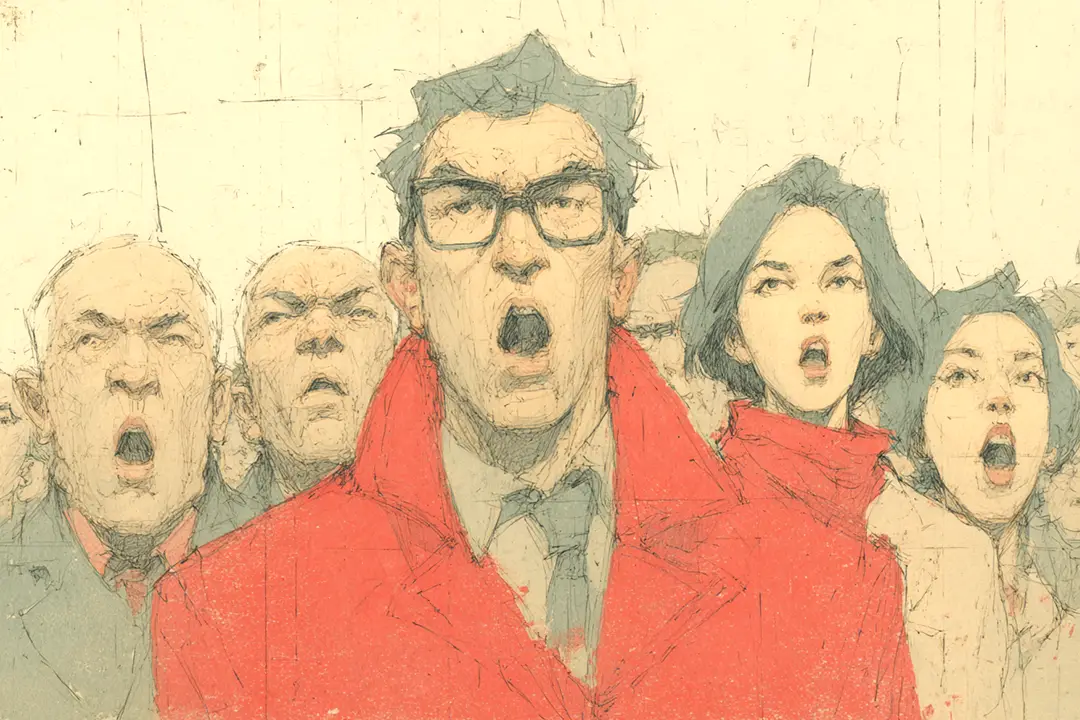
In a coordinated move in March, some of China’s premier studios issued a joint declaration against unauthorized AI cloning of their performers’ voices. The coalition is demanding the immediate removal of pirated audio and has signaled its intent to pursue legal action against infringement.
The pushback marks declaration of war by an influential collective of radio dramatists, voice-over actors and television narrators. Their voices are becoming increasingly influential in shaping consumer habits across China — particularly on platforms like Douyin, the domestic version of TikTok. Driven by a surge in user-generated content, industry estimates suggest that more than half of all video narrations on such platforms over the past year or two may have been AI-generated. Many of these digital clones leverage the highly recognizable, yet often unlicensed, voices of actors who are household names actors.
The rise of instant cloning
While early AI tools were primarily text-based, a new wave of applications now specialize in high-fidelity synthesis of images, audio and video. Software now requires only a short audio or video clip to quickly generate a highly accurate digital clone of a human.
A myriad of open-source tools currently allow individuals to upload audio to clone arbitrary speech. However, the most significant recent disruptor is Seedance 2.0, developed by ByteDance. The tool’s Chinese iteration allows users to clone their own likeness and voice to generate content, even enabling them to “insert” themselves into scenes from classic movies. Following a public outcry over the technology, ByteDance blocked prompts related to famous films and actors. Nevertheless, the unchecked proliferation of content posted by individuals on short-video platforms and generated using free tools continues to infringe upon the intellectual property rights of voice professionals.
An uphill battle for creators
Taking legal action to stop the spread of unauthorized closing is exceedingly difficult. According to National Business Daily, while AI face-swapping is easily identifiable, voice theft is much harder to prove. Voices are fleeting, easily manipulated by altering speed or splicing, and lack a unified legal standard for identification, creating a high-cost, low-return scenario for individuals seeking to sue for infringement.
Despite these hurdles, the industry is mobilizing. Since the mid-March declarations, major studios have been systematically gathering evidence. Some have established dedicated whistleblower email hotlines for the public to report infringement, while others have retained lawyers to seek economic damages and compel platforms to implement takedowns.
Legal precedent offers a glimmer of hope. In 2024, a Chinese court ruled in the nation’s first AI voice infringement case, ordering a software company to cease the unauthorized use of a voice actor’s cloned audio and pay 250,000 yuan ($34,700) in damages. As reported by state broadcaster CCTV, the court determined that a human speaker is legally protected if the general public can reasonably associate the AI-generated tone and style with the original artist.
A global conundrum
In China, courts have shown increasing willingness to protect human creators who use AI tools. According to Tencent Technology, a landmark January 2024 ruling affirmed that AI-generated images can receive copyright protection if they reflect a sufficient intellectual input from a human, awarding a creator 500 yuan in damages. The country also accepted its first lawsuit dealing with AI-generated audio-visual copyright in April 2024.
The generative AI cloning issue is not limited to China. Around the world, lawmakers and courts are struggling to deal with the evolving relationship between human creativity, AI, and the law.
On March 2, the U.S. Supreme Court declined to hear a dispute over whether AI-generated art can be copyrighted, Reuters reported. The case involved a computer scientist whose copyright application for visual art produced entirely by his AI system was rejected by the U.S. Copyright Office, which maintained that creative works must have a human author to be eligible for legal protection.
Sources: