
By Da Cheung
Chinese tech giant Xiaomi, which launched its first EV car model in 2024, is rapidly adding a formidable roster of automotive executives to beef up operations amid cutthroat competition and slowing growth in the domestic market.
Kong Yanshuang, former general manager for Tesla China, recently joined Xiaomi, one of the country’s top smartphone makers, to oversee automotive sales, according to a report in Jiemian News. Kong is known for successfully building Tesla’s sales and service networks in China. Analysts suggest her expertise will help Xiaomi streamline its expanding retail network — which currently includes over 470 stores — and help the company transition from an initial burst of consumer hype to a steady, long-term sales rhythm.
Separately, Lanjing News reported that Song Gang, the former manufacturing vice president who spearheaded the construction of Tesla’s Shanghai Gigafactory, has also joined the company. Nicknamed the “ace factory director,” Song brings crucial expertise in production scaling, the complex process of rapidly increasing factory output without sacrificing quality. His arrival comes as Xiaomi races to meet an ambitious delivery target of 550,000 vehicles for 2026. The company currently operates two manufacturing plants in Beijing at full capacity, with a third recently brought online and a fourth planned for Wuhan.
Domestic market battle and global ambitions
These leadership additions arrive as Xiaomi steps up competition with Tesla for market share in China. In 2025, Xiaomi delivered around 400,000 vehicles. While Tesla’s Model Y remained a top seller with over 425,000 units, Xiaomi’s inaugural SU7 sedan outsold the Model 3, according to data from auto platform Yiche. In the first two months of 2026, Xiaomi’s newly launched Yu7, a high-performance, mid-size electric crossover SUV, had already surpassed the Model Y in sales volume. Tesla, by contrast, saw its China sales drop 7.1% in 2025, held back by aging designs and a vicious domestic price war.
Looking beyond its home market, Xiaomi is laying the groundwork for European expansion. According to 36kr, the company has established a research and development (R&D) center in Munich, Germany. To staff it, Xiaomi recruited veterans from established luxury automakers, including former BMW and Ferrari track engineers and aerodynamics experts.
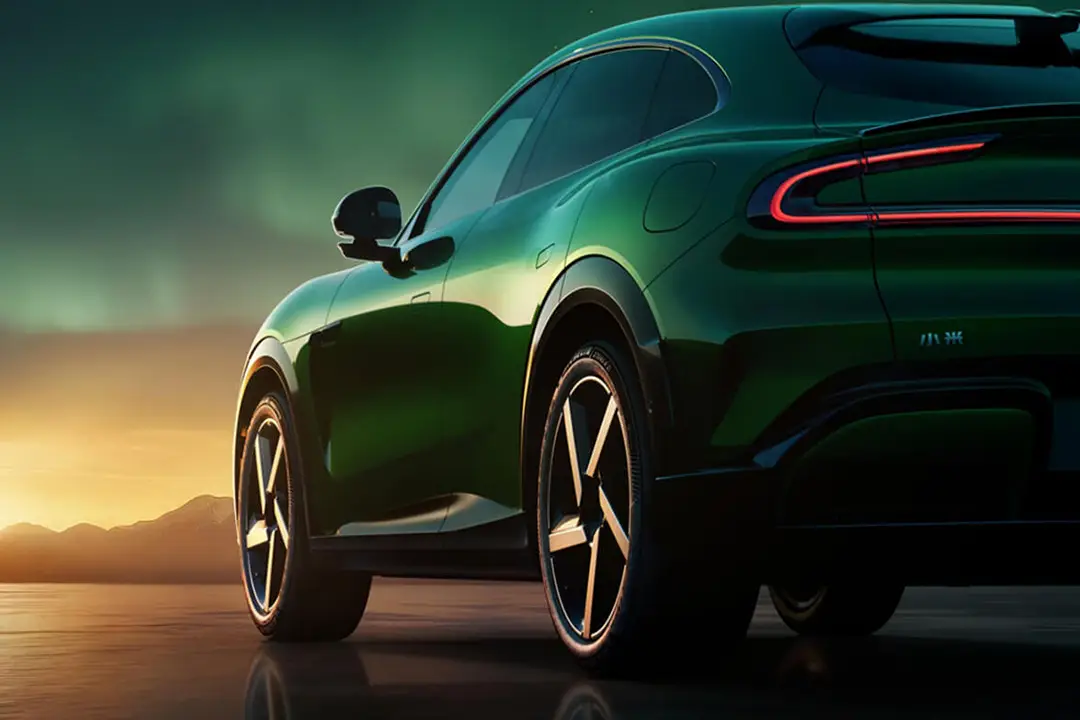
Xiaomi’s vehicles have drawn widespread attention for their striking resemblance to iconic European luxury models — the SU7 closely mirrors the Porsche Taycan, while the new Yu7 bears a heavy visual likeness to the Ferrari Purosangue.
One of the tasks of the elite European R&D team is to fine-tune the track-focused SU7 Ultra edition. The goal is to achieve record-breaking lap times on Germany’s Nürburgring race track — a notoriously difficult circuit used as an industry benchmark. This is a classic strategy used by traditional luxury sports brands to build prestige before applying those high-performance technologies to everyday cars for the ordinary consumer. Xiaomi is also exploring the possibility of setting up sales networks in countries including Spain, Germany, and France, aiming to leverage the strong brand recognition it already enjoys in Europe from its smartphone business.
EVs, AI strategy lead to R&D splurge
Xiaomi’s talent acquisition also extends into the highly competitive AI industry. The company recruited AI expert Luo Fuli from the prominent Chinese AI startup DeepSeek last year. Under her leadership, Xiaomi rapidly rolled out MiMo V2 large language model. Luo’s annual salary at Xiaomi has been reported to be as high as 10 million yuan ($1.4 million), although there is no official confirmation of that figure. What is clear, however, is the massive scale of Xiaomi’s overall investment in R&D.
Its annual earnings report, released on March 24, showed that its R&D expenditure surged 37.3% in 2025 to 33.1 billion yuan, after jumping 25.9% to 24.1 billion yuan in 2024. Last year’s spending almost matched its adjusted net profit of 39.2 billion yuan.
While Xiaomi reported a record-high total revenue of 457.3 billion yuan in 2025 — with its EV and AI divisions accounting for over 106.1 billion yuan, investors appear cautious about the company’s heavy spending and the long-term profitability of these new ventures. Xiaomi’s Hong Kong-listed shares have fallen almost 20% this year and have almost halved from their record high in June 2025.
Sources: