
By Da Cheung
Alibaba recently switched on a massive AI computing cluster powered entirely by its proprietary chips, underscoring how Chinese tech groups are scaling up efforts to challenge Nvidia and reduce the country’s dependence on U.S. hardware.
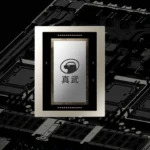
The 10,000-card “Zhenwu” computing cluster in Guangdong province in southern China, built in collaboration with China Telecom, serves as a key computing hub for government agencies, medical institutions, and automakers, according to the company. But it also highlights the intense, silent arms race playing out behind closed doors as Beijing seeks semiconductor self-reliance.
Operating under the radar
In the AI chip war, Beijing appears determined to keep its cards hidden. Companies like Alibaba and Huawei operate under strict secrecy to protect their supply chains and technological roadmaps. Alibaba’s Zhenwu 810E chips — previously known internally as PPUs, a parallel processing design similar to Nvidia’s graphics processing units (GPUs) — have been in development since 2020. Despite shipping to external clients for a year, the company only publicly acknowledged the chip’s existence in January 2026.
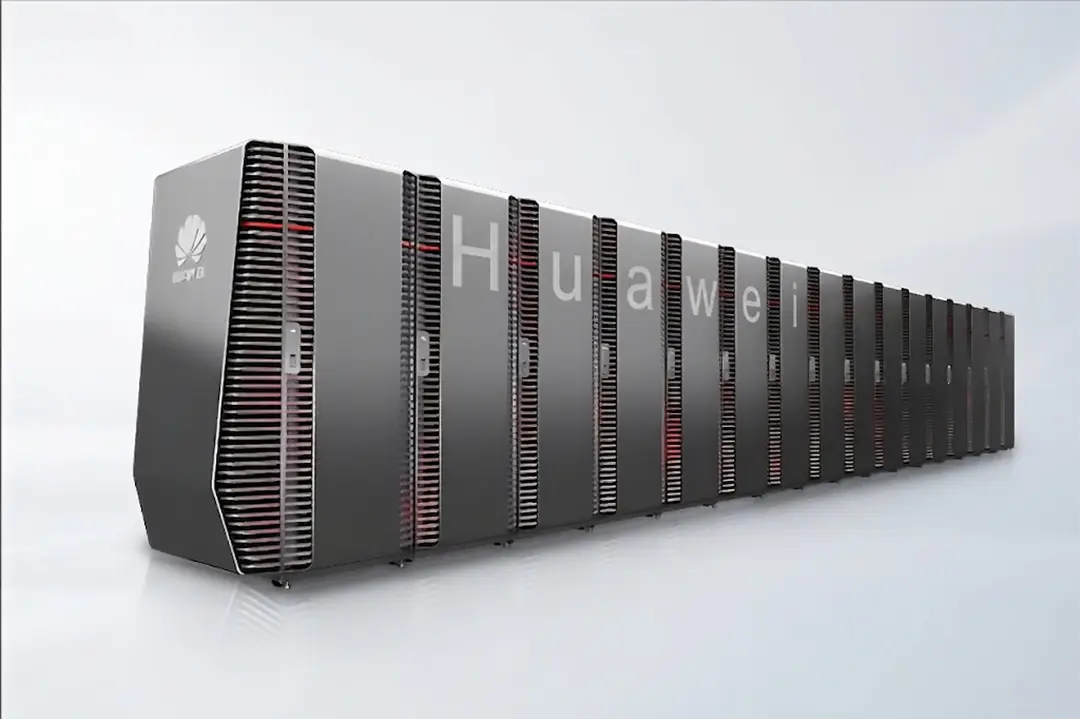
Similarly, Huawei’s latest processor launched in late March, the Ascend 950PR — whose comprehensive processing performance could closely rival Nvidia’s H200 card when running specially optimized domestic LLMs — has seen virtually no coverage from China’s state media. This information blackout also extends to grassroots research; when domestic tech influencers dismantled Huawei’s newest smartphones to analyze their semiconductor capabilities and manufacturers, their videos were swiftly scrubbed from the internet.
This intense secrecy protects highly strategic assets as domestic tech giants aim for total vertical integration: currently, Alibaba and Google are the only two companies globally to possess a complete, top-tier proprietary trifecta of large language models, custom AI chips, and cloud computing services.
Expanding the silicon footprint
Despite the secrecy, the scale of domestic deployment is surging. Alibaba says more than 30 automakers and autonomous driving firms are now using over 100,000 Zhenwu cards on its cloud platform. According to the company, these chips will accelerate new computing paradigms like Vision-Language-Action (VLA) and “world models” — advanced AI frameworks that help autonomous vehicles intuitively understand and predict their physical environments.
Such applications rely primarily on inference — running trained models in real time — rather than the more demanding process of training massive new models from scratch. While Nvidia remains the undisputed leader in training LLMs, domestic firms are finding they can compete more effectively in inference, which is typically handled by AI accelerators — specialized processors such as GPUs and custom-designed chips. As a result, performance is increasingly judged by how efficiently these processors can generate tokens, the basic data units of text or code an AI model produces.
Caijing Magazine reports that at least nine domestic chipmakers, including Baidu and Cambricon, have now shipped over 10,000 AI accelerators. In optimized scenarios, domestic chips like Alibaba’s Zhenwu or Baidu’s Kunlunxin can match or exceed the token-generation efficiency of Nvidia’s H20 — a downgraded processor Nvidia specifically designed for the Chinese market to comply with Washington’s export controls.
Bridging the software divide
Yet, replacing Nvidia requires more than raw computing hardware. Nvidia’s global dominance is deeply rooted in CUDA, its proprietary software platform. Transitioning to Chinese chips traditionally required developers to completely rewrite their code, a costly and time-consuming hurdle.
This software friction has caused notable bottlenecks. A widespread consensus in the tech industry is that DeepSeek V4 — the highly anticipated next iteration of the popular Chinese LLM — has been delayed largely due to the complex process of adapting the software to run smoothly on domestic AI chips.
Huawei’s Ascend 950PR aims to solve this dilemma. According to Reuters, tech giants including ByteDance and Alibaba plan to place orders for the new Huawei chip because it is significantly more compatible with Nvidia’s CUDA ecosystem. Priced at around 50,000 yuan ($6,900) per card – or 70,000 yuan for a premium version featuring high bandwidth memory (HBM) to accelerate data transfers — mass production of the 950PR is scheduled to begin in May.
Huawei plans to ship around 750,000 of these new chips this year, Reuters reported. While the U.S. government recently permitted Nvidia’s more powerful H200 chips to be exported to China, Chinese authorities have not yet cleared domestic companies to purchase them. With the 950PR bridging the critical software gap, Beijing’s long-term strategy to develop an entirely independent AI supply chain is gaining significant momentum.
Sources: