

By Da Cheung
The global artificial intelligence boom is minting a new titan in China’s semiconductor industry.
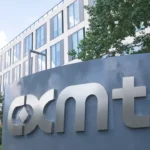
Changxin Memory Technologies, commonly known as CXMT, recently updated its IPO prospectus, revealing staggering financial projections fueled by surging memory chip prices. According to the company, revenue for the first half of 2026 is expected to reach about 115 billion yuan ($16.9 billion) — a year-over-year increase of more than 600%.
With net profit projected to hit up to 57 billion yuan for the same period, a successful listing could make CXMT one of the highest-earning publicly traded companies in China. According to Caijing Magazine, its net profit would rank just behind a few state-owned commercial banks, surpassing traditional behemoths like China Petrochemical and China Life Insurance, and ‘King of Batteries’ CATL.
Industry analysts estimate that CXMT’s valuation could reach anywhere from 1 trillion to 4 trillion yuan after it goes public on Shanghai’s Nasdaq-style tech-focused STAR Market. This would mark a historic milestone, creating the first trillion-yuan tech giant on the board and potentially reshaping the valuation system of the country’s technology sector. The company plans to raise 29.5 billion yuan through the IPO to fund wafer manufacturing upgrades and advanced research, according to Economic Observer.
Skipping generations to catch the boom
Founded in 2016 and headquartered in Hefei, the capital of Anhui province, CXMT has grown into China’s premier manufacturer of dynamic random access memory, or DRAM — the short-term memory chips essential for running applications on smartphones, computers, and AI servers. The company operates three wafer fabrication plants across Hefei and Beijing, supplying major domestic tech and smartphone firms including Alibaba Cloud, ByteDance, Tencent, Lenovo, Xiaomi, OPPO, and vivo.
Unlike many tech startups, CXMT has no single controlling shareholder. Its backing is heavily state linked, with entities tied to the Hefei municipal government holding at least 33% of the equity. Another 8.73% is held by Big Fund Phase II, officially known as the National Integrated Circuit Industry Investment Fund, a massive state-backed vehicle that is a cornerstone of China’s broader push to build a self-reliant domestic semiconductor industry.
For years, the global DRAM market has been dominated by a near-monopoly of three international giants: Samsung, SK Hynix, and Micron Technology. However, CXMT is rapidly catching up. According to research firm Omdia, CXMT’s global market share had nearly doubled to 7.67% in the fourth quarter of 2025 from 3.97% six months earlier, making it the world’s fourth-largest DRAM producer.
Much of this success stems from a bold gamble made during the industry’s lowest point. While the global memory market suffered a severe downturn in 2023 — causing CXMT to post a 19.2 billion yuan loss — the company maintained its aggressive expansion. By the end of 2024, CXMT halted production of older DDR4 chips and fully transitioned its capacity to the more advanced DDR5 generation. This leapfrog strategy coincided with the explosion of AI data centers, which require the faster data processing speeds that DDR5 provides.
Riding the AI super cycle
The ongoing AI revolution has created an unprecedented supply-demand mismatch in the memory sector. As tech giants rush to train complex AI models, Samsung, SK Hynix, and Micron have aggressively reallocated their production lines to manufacture High Bandwidth Memory, or HBM — specialized, high-margin ultra-fast chips that are stacked together to feed data to AI processors.
The three giants expanded their HBM wafer capacity by nearly three times over the past two years, significantly squeezing the production of traditional DRAM chips. The resulting shortage has sent prices skyrocketing. In the first quarter of 2026, contract prices for consumer DRAM jumped by about 75% to 80% from the last three months of 2025, the largest single-quarter increase in five years, according to TrendForce data cited by Economic Observer.
These surging costs are already squeezing downstream consumer electronics brands. In March, amidst industry-wide smartphone price increases driven by memory costs, an executive at Chinese smartphone giant Xiaomi described the financial pressure of absorbing these hikes as “painful,” following earlier consumer backlash over the higher-than-expected pricing of its lower-end models last October.
This structural shift created a lucrative vacuum. As the dominant trio focused on HBM — a technology CXMT has yet to fully master — the Chinese manufacturer became a primary supplier of traditional but highly profitable DDR5 chips. Consequently, CXMT’s gross margin rebounded dramatically from deeply negative in 2023 to nearly 41% in 2025, rivaling the profitability of Samsung’s semiconductor division.
Will the cycle break?
Despite the current euphoria, memory chips have historically been highly cyclical commodities, vulnerable to brutal boom-and-bust phases. A growing debate in the industry is whether AI has permanently altered this dynamic or if a massive oversupply is looming around 2028, when new fabrication plants come online.
Technological advancements in software could also cool the overheated hardware market. In March, Google introduced a breakthrough AI compression algorithm named TurboQuant. The technology reduces the memory footprint of large language models — specifically by shrinking the “KV Cache,” a mechanism AI uses to store conversational context — by up to six times without sacrificing accuracy.
The announcement sent shockwaves through the market, causing a sharp sell-off in memory stocks. Investors feared that if software can drastically reduce memory requirements, the projected hardware “super cycle” might be overstated, according to TMTPost.
While long-term bulls argue that greater software efficiency will ultimately lower computing costs and unlock even broader AI adoption — thereby sustaining hardware demand — the shadow of the cycle remains. For now, CXMT is positioned at the crest of an unprecedented wave, armed with expanding market share and an impending IPO. Yet, as the industry braces for technological shifts and future capacity gluts, the newly minted giant will soon face a critical test of its resilience.
Sources