

By Chen Jishen
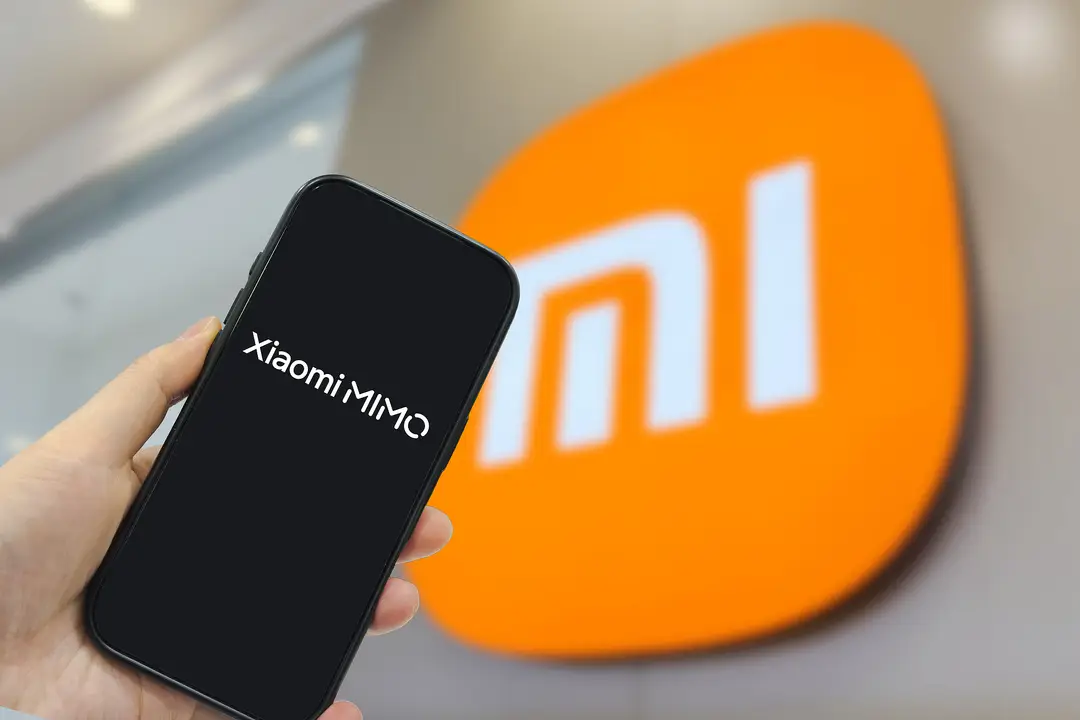
China’s artificial intelligence price war intensified this week after Xiaomi slashed the cost of its MiMo large language model APIs by as much as 99%, matching price cuts recently introduced by rival DeepSeek and signalling a broader shift in how AI services are valued.
The move was highlighted by Xiaomi founder Lei Jun, who reposted details of the cuts on social media. Beyond the headline discount, the key development was the new pricing structure for Xiaomi’s MiMo-V2.5-Pro model: 6 yuan ($0.84) per million output tokens and 3 yuan per million uncached input tokens, while cached requests cost just 0.025 yuan per million tokens.
Those figures are identical to the long-term pricing DeepSeek announced for its V4-Pro model on May 22 when it dropped the cost by 75%, prompting Alibaba to introduce discounts on its Qwen3.7–Max model a few days later.
DeepSeek launched its V4 series in April with higher prices before rapidly introducing discounts. It subsequently made those reductions permanent, establishing a new benchmark for advanced AI services in China. Xiaomi’s decision to align its prices with DeepSeek suggests the market is beginning to converge around that benchmark rather than treating it as a temporary promotion.
From capability premiums to cost competition
The cuts come as Xiaomi seeks to maintain momentum among developers after completing a token giveaway programme designed to encourage adoption of its platform. By lowering prices permanently and resetting customer quotas, the company is aiming to retain developers building AI agents and enterprise applications.
More importantly, the reductions reflect a change in the economics of the industry. For much of the generative AI boom, providers charged according to model capability. Stronger reasoning, coding performance and larger context windows justified higher prices.
The latest moves suggest another factor is becoming decisive: the cost of delivering each inference request.
Xiaomi attributed the reductions to improvements in system efficiency, including better caching and resource management. Such engineering advances are increasingly central to competition. Success is no longer determined solely by model quality but also by how efficiently companies can operate the infrastructure behind it.
One area attracting particular attention is prompt caching, which stores repeated context so that it does not need to be processed from scratch each time.
The economics of AI agents
The ultra-low price of 0.025 yuan per million tokens applies only when cached information is reused. Yet that could have significant implications for enterprise applications.
Many AI systems repeatedly process the same information, including system prompts, company knowledge bases, software documentation and workflow instructions. Historically, the cost of handling these large contexts has been one of the barriers to deploying sophisticated AI agents at scale.
As caching costs approach negligible levels, the economics of running complex, multi-step workflows begin to improve.
Xiaomi has reinforced that trend by eliminating higher charges for larger context windows. Previously, developers paid more for tasks involving substantial amounts of text. Under the new structure, context length no longer affects pricing, reducing costs for applications built around long documents and extended interactions.
The contrast with global pricing remains striking. Leading western AI providers continue to charge prices measured in tens of dollars per million tokens for premium services. Xiaomi and DeepSeek, by comparison, are charging less than a dollar.
Pressure on enterprise AI spending
The widening gap is likely to influence how businesses purchase AI services.
Rather than relying on a single model, companies are increasingly expected to route different tasks to different providers. High-risk legal analysis, financial decision-making and critical code reviews may still justify premium models with stronger reliability and compliance credentials.
Routine customer-service enquiries, document summaries, internal knowledge-base searches and first-draft coding tasks, however, are likely to migrate towards lower-cost alternatives.
In effect, enterprises may end up buying routing systems rather than individual models. Competition would then depend not only on benchmark scores but also on price, throughput, latency and stability.
Low prices alone, however, do not guarantee lower operating costs. Real-world economics depend on factors such as cache-hit rates, service reliability and performance under heavy demand. A model that appears inexpensive on paper can become costly if it struggles in production.
The deeper question raised by Xiaomi and DeepSeek is therefore not who can offer the lowest price, but who can sustain those prices while maintaining quality and scale.
For China’s AI industry, the implications are broader. The sector is moving beyond an era in which providers competed primarily on model prestige and capability. Increasingly, competition is shifting towards infrastructure efficiency and operating costs. The latest price cuts suggest that AI services are beginning to resemble utility infrastructure, where long-term success depends less on headline performance than on the ability to deliver it cheaply and reliably at scale.
Source:
Guanch a.cn