

T-Head is gaining ground on Nvidia’s mainstream products, but still faces challenges over performance, supply and its ability to win external customers.
By Wu Junyu
Alibaba Group (09988.HK) (BABA.US) plans to spin off its wholly owned chip subsidiary T-Head (Shanghai) Technology for a separate listing on the Hong Kong Stock Exchange, marking a new phase for the group’s semiconductor business.
Alibaba announced the proposed listing on Nov. 10 but the size of the initial public offering has not yet been finalised. T-Head submitted a confidential Form A1 application filing to the exchange on Sept. 11. It will remain an Alibaba subsidiary after the listing.
A person familiar with Alibaba Cloud told Caijing that the move would help investors value Alibaba’s core businesses more clearly while highlighting T-Head’s commercial potential as a leading Chinese provider of full-stack data center chips. An independent listing could also attract specialist investors in semiconductors and AI computing, while giving the company greater scope to invest in research and development and recruit talent.
Shipments top 560,000 chips
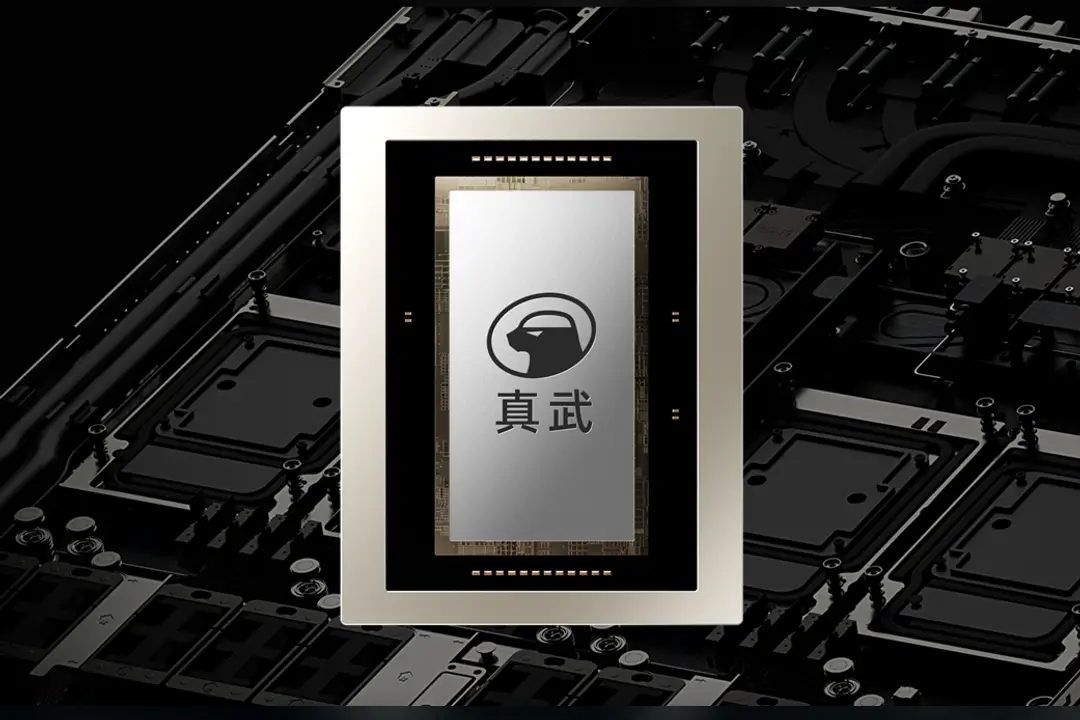
T-Head is Alibaba’s semiconductor business, with products including the Zhenwu series of graphics processing units (GPUs) and the Yitian series of central processing units (CPUs).
Alibaba said cumulative shipments of Zhenwu AI accelerators had reached 560,000 units by April 2026. The chips were serving more than 650 corporate customers across over 20 industries, including autonomous driving, finance, large language models, embodied AI, energy and manufacturing.
T-Head chips reach customers through two channels: as cloud computing instances provided by Alibaba Cloud, and through direct hardware sales. Alibaba management said on a March 2026 earnings call that more than 60% of T-Head computing capacity deployed on Alibaba Cloud was being used by external customers.
According to market research firm IDC, T-Head ranked second among Chinese AI chip suppliers by shipments in the domestic data center market in the first half of 2026, behind Huawei’s Ascend series and ahead of Cambricon(688256.SH) and Baidu’s Kunlunxin. Its shipments exceeded 100,000 units during the period.
The Zhenwu range has undergone several iterations. Products already on the market include the Zhenwu 810E and M890 series, while the V900 series is under development.
Production capacity for domestic chips has long been a market concern. In August, on the earnings call for the first quarter of fiscal 2027 (the second quarter of 2026), Alibaba management disclosed that development of the next-generation Zhenwu series AI chip is planned to begin in the second half of 2026.
Closing the gap with Nvidia
After several generations of development, the Zhenwu chips are increasingly competitive with Nvidia’s mainstream products in large-scale computing clusters, although they remain behind its most advanced B300 series.
An engineer at a local state-owned digital technology company told Caijing that he tested the Zhenwu 810E, Huawei’s Ascend 910B and Baidu’s Kunlunxin P800 in the second half of 2025. The 810E delivered token throughput when running DeepSeek models that placed it among the leading domestic chips, but still lagged Nvidia’s H200.
The newer Zhenwu M890 represents a substantial performance improvement. In a supernode configuration, it can run models with around 2.5 trillion parameters, including Kimi K3 and Alibaba’s Qwen-3.8Max. Its overall performance in a cluster environment can match Nvidia’s H200, according to the report.
Alibaba Cloud has disclosed technical details: a Lingjun supernode instance comprising 64 Zhenwu M890 cards, with cards fully interconnected at a bandwidth of 800 gigabytes per second and 9 terabytes of memory, can address the memory and network bandwidth bottlenecks in running trillion-parameter models.
A supernode refers to a computing unit that connects dozens or even hundreds of AI chips through high-speed interconnects to work cooperatively with unified memory, mainly used to carry ultra-large models that cannot fit on a single card or server.
An infrastructure source at a cloud computing vendor previously told Caijing that Nvidia’s H200 would be “strained” running models with more than 2.5 trillion parameters such as Kimi K3, and that only Nvidia’s B300 can run them smoothly.
Nvidia’s H200 mainly ships in the form of 8-card servers and has no large-scale deployed supernode products, which limits its inference efficiency when running ultra-large-parameter models.
Caijing understands that a single H200 card has 141GB of memory, similar to the Zhenwu M890, but its servers usually use eight cards as a high-speed interconnect unit with total memory of about 1.1TB. Running models with more than 2.5 trillion parameters such as Kimi K3 requires cross-server deployment, and communication bandwidth and latency between servers become constraints.
Listing brings new commercial test
T-Head’s proposed listing comes as Chinese AI chipmakers increasingly turn to public markets for capital. Biren Technology (6082.HK) and Iluvatar CoreX (9982.HK) listed in Hong Kong earlier this year, while Enflame Technology (688801.SH) debuted on Shanghai’s STAR Market on Sept. 11. Baidu’s Kunlunxin also confidentially filed for a Hong Kong listing in January.
The spin-off signals Alibaba’s intention to move its chip business beyond its traditional role supporting the group’s internal operations. Alibaba Cloud will remain an important customer and deployment environment, but T-Head will increasingly need to demonstrate its commercial value independently to investors and external customers.
The company’s ambitions also face the broader constraints affecting China’s semiconductor industry. With access to advanced manufacturing processes and high-bandwidth memory (HBM) restricted, chipmakers must compete not only on hardware performance and shipment volumes, but also on their ability to secure reliable supplies and build a broader external customer base.
Those factors will help determine whether T-Head can turn its growing technical capabilities into a sustainable business.
Source:
Caijing AI Watch