By Guan Yiwen and Shen Fangwei
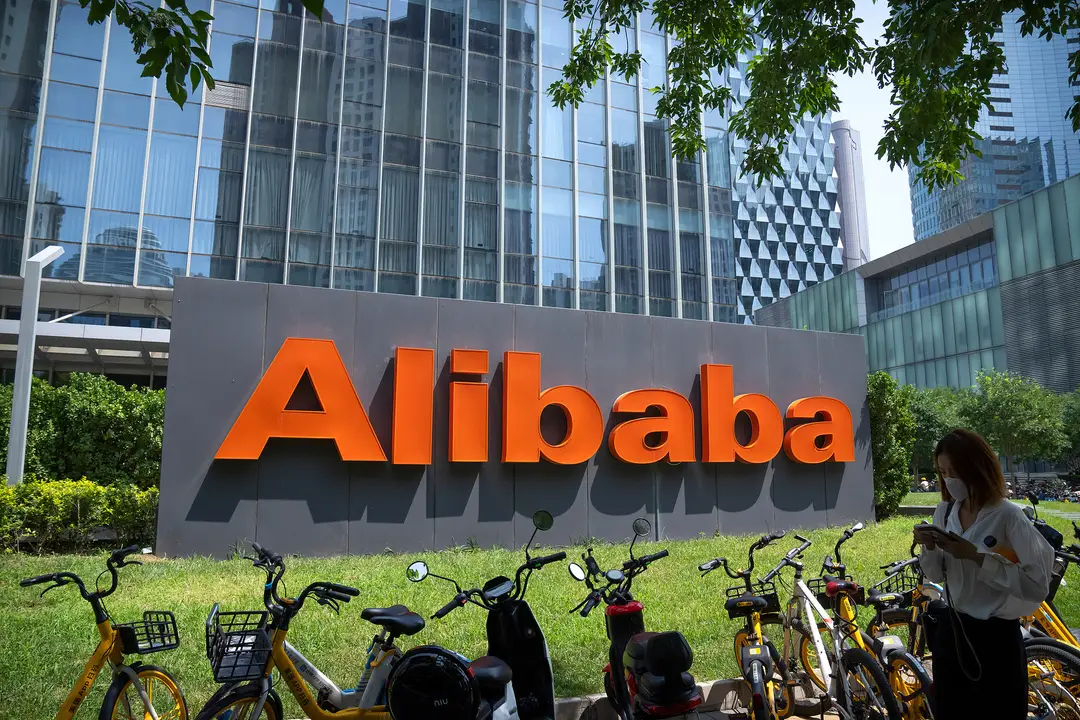
One year ago, tech giant Alibaba (9988.HK) (BABA) launched an all-out war on “super app” Meituan’s (3690.HK) home turf: food delivery. Critics called it a costly distraction. Today, after burning through billions of yuan in subsidies and building out a national delivery grid from scratch, Alibaba’s core management has reached a quiet but decisive verdict: the war was necessary, and the real fight — for instant retail — has only just started.
Behind the scenes, two personnel changes in May 2026 signaled the shift. Group chief technology officer Wu Zemin joined Alibaba’s Partners Committee, the company’s highest decision-making body. Meanwhile, Yan Xiaolei, the chief executive of Hema (Freshippo), the online-to-offline grocery chain subsidiary, began reporting directly to Jiang Fan, who oversees all of Alibaba’s product-related businesses. Insiders read this as Hema being folded into the broader e-commerce group — a major step toward unifying Alibaba’s scattered instant retail operations.
For 11 years, Alibaba fought itself. Its food and grocery services — including restaurant delivery (Ele.me), supermarkets (Hema and Tmall Supermarket), and online grocery ordering (Taoxianda) — all operated independently, often competing for the same customers. The food delivery war changed that. For the first time, Alibaba consolidated its fragmented supply — restaurants, fresh produce, supermarkets, medicine — under a single brand: Taobao Flash Delivery.
“Consumers don’t need to understand the difference between Hema, Taoxianda, and Tmall Supermarket,” one Alibaba insider said. “They just need one reason to open the app. You have to gain enough mindshare in the highest-frequency use case — food delivery — before you can build a foundation for other categories.”
A unified front after years of infighting
The results, by Alibaba’s own accounting, are striking. Instant retail daily active users grew from near zero to over 100 million. Daily orders now stand at roughly 60 million, pushing Alibaba’s market share from 20% to over 40% in one year. Per-order fulfillment costs have nearly matched Meituan’s. What no one thought possible — a credible second player in food delivery — has become reality.
But the real prize, according to Alibaba’s internal reviews, is what didn’t happen. “If we hadn’t fought this war,” one Alibaba manager said, “Meituan would have accelerated expansion in instant retail, competing head-on with Alibaba in e-commerce. Its profits would have rivaled ours.” By striking first, Alibaba turned a potential single-player market back into a two-horse race.
The cost, however, has been enormous. Alibaba invested nearly 100 billion yuan ($14.8 billion) in cash over the past year — heavy subsidies for users, massive infrastructure spending on warehouse networks and delivery grids. The company’s entire annual profit was eroded as a result. Yet management believes the price was justified to prevent what they saw as a worst-case scenario: Meituan growing unchallenged into a rival as large as Alibaba itself.
What Meituan lost beyond market share
Meituan, for its part, still leads in high-value orders above 30 yuan, holding roughly 70% of that profitable segment. But insiders admit the company lost something harder to quantify: complacency. “The biggest problem over the past several years,” a Meituan employee said, “was the disappearance of a daily sense of crisis.” That crisis is now back.
The wake-up call has extended beyond food delivery. In the in-store dining business, Meituan has struggled to counter short-video and livestreaming platform Douyin‘s aggressive expansion. Douyin’s independent group-buying app, Doushengsheng, reached 16 million daily active users just three months after launch — a reminder that Meituan is now under pressure on multiple fronts.
The war has pulled both sides back to reality. Alibaba has retreated from the belief that subsidies alone can win a market, now confronting the hard truths of profitability and efficiency. Meituan has been stripped of the absolute security that came with being the undisputed number one. Both companies now understand that this is a long fight.
The infrastructure race for an AI future
The battlefield is already shifting. Alibaba and Meituan are racing to build out micro-fulfillment centers, grid networks, and warehouse density — heavy infrastructure that both believe will matter more than algorithms in the AI era. Alibaba has set targets of 1 trillion yuan in instant retail sales by fiscal 2028, and profitability by fiscal 2029.
With the World Cup approaching and summer campaigns underway, Alibaba will continue investing — though the intensity will moderate from last year’s blitzkrieg to more efficient positional warfare. Food delivery was just the opening move.
As one Alibaba manager put it: “The competition is far from over. The battle for instant retail has only just begun.”
Source:
LatePost