
By Da Cheung
The global transition to green energy may look sleek and futuristic, but it is fundamentally tethered to the traditional heavy industry of mineral extraction.
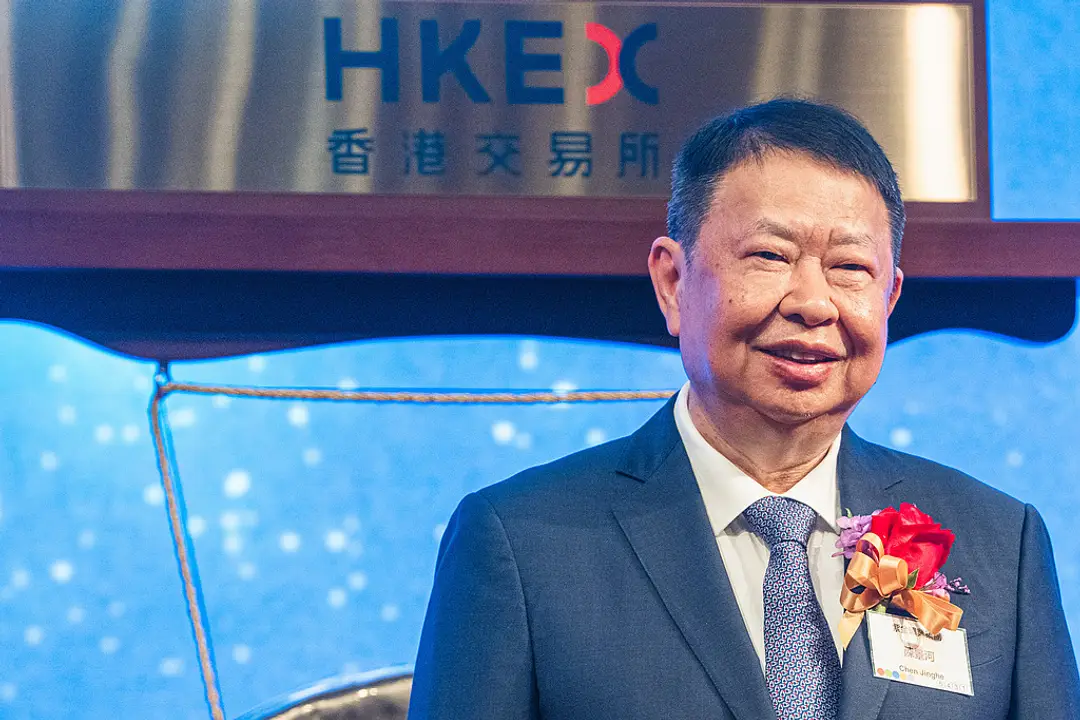
That reality was underscored this week when Contemporary Amperex Technology Co. Limited (CATL) (300750.SZ, 3750.HK), the world’s dominant battery maker, hired 69-year-old mining tycoon Chen Jinghe as an advisor for its upstream resource department. Chen, who founded and built Zijin Mining into a $100 billion global mining powerhouse, retired in January. His swift return to the corporate world, just three months later, underscores how crucial mineral resources are to the renewable energy industry under the constraints of current clean energy technologies.
The Chinese battery behemoth announced in March that its 2025 net profit surged 42.3% to 72.2 billion yuan ($10 billion) on a 17% increase in revenue to 423.7 billion yuan. In a sign of just how much cash the business is generating, CATL announced a special dividend of 47.79 yuan per 10 shares on top of a final dividend of 21.78 yuan per 10 shares.
The company now commands a 39.2% share of the global electric vehicle (EV) battery market and 30% of the energy storage sector. However, volatile prices and geopolitical scrambles for critical metals like lithium, nickel, and cobalt remain significant vulnerabilities for the industry.
Securing the supply chain
Mining is a notoriously high-risk, capital-intensive sector where automakers and tech companies often stumble due to a lack of operational expertise. CATL has already aggressively acquired stakes in assets around the world, including a 24% share in a massive lithium mine in the Democratic Republic of Congo and multiple salt lake projects in South America.
By bringing Chen on board, CATL aims to “borrow the brain” of a world-class mining strategist, according to a report in Jiemian. Chen is renowned for the “Zijin model,” which excels in extracting value from low-grade ores, slashing operating costs, and navigating complex international acquisitions.
The convergence of old mining and new tech goes both ways. Traditional resource companies like Zijin Mining are actively pushing into the green sector. Late last year, Zijin helped launch China’s first ship powered by an ammonia-hydrogen internal combustion engine. The company says the vessel reduces carbon emissions by over 99% and slashes operating costs by 45% compared with traditional vessels that use fossil fuels.
Navigating the geopolitical chessboard
CATL’s upstream consolidation comes as it races to strengthen its grip on overseas markets. To bypass trade barriers in Europe, Chinese new energy firms including EV and battery maker BYD are building massive factories in Eastern European countries like Hungary. CATL poured a record amount of capital into European equipment installations in late 2025 to ensure its factories achieve mass production by early 2026, according to a report by 36Kr.
The U.S. market, however, presents steeper geopolitical hurdles, with complex tariffs and investment restrictions that have driven CATL to forge an alternative path through technology licensing. Ford recently announced it would invest $2 billion to repurpose parts of its U.S. manufacturing capabilities into battery energy storage operations, pivoting away from producing large passenger EVs.
The U.S. automaker has struck a licensing deal with CATL to use its lithium iron phosphate (LFP) technology. LFP batteries don’t use expensive, controversial metals such as cobalt and nickel, making them significantly cheaper, more thermally stable, and capable of enduring thousands of charging cycles without degrading. Automakers like Nissan say this chemistry drastically reduces the risk of battery fires and lowers production costs compared with standard ternary lithium-ion batteries.
The Matthew Effect in clean energy
Chinese companies have scored a decisive win in the current battery battle — seven of them combined account for 84% of global energy storage battery shipments, leaving foreign rivals like South Korea’s LG Energy Solution and Japan’s Panasonic lagging far behind. Korean companies hold a mere 4% of the energy storage market, partly due to the safety limitations of their preferred battery chemistries in large-scale storage applications.
CATL is aggressively expanding its battery swapping network in China, aiming to deploy over 3,000 passenger-car battery-swapping stations in a network that will stretch across more than 140 cities by the end of 2026. It also plans a smaller network for heavy-duty trucks.
But its ambitions go beyond cars and energy grids. It is rapidly expanding into other electric-powered modes of transport including ships, electric vertical takeoff and landing aircraft (eVTOLs), and commercial trucking.
CATL is transitioning from a battery manufacturer into a fully integrated energy metals giant. As the clean energy sector matures, its dominant position is set to amplify a powerful “Matthew effect”, with the industry’s richest player getting richer still.
Sources: