By Da Cheung
A flurry of major artificial intelligence updates hit the market this week. Both American and Chinese tech companies released highly specialized models to automate software development, animate virtual avatars, and manage complex office workflows. The industry is also speculating about when the long-awaited DeepSeek V4 will be unveiled.
As AI capabilities encompass increasingly wider domains — from writing thousands of lines of code to orchestrating actions across multiple applications — it is becoming increasingly difficult to produce unified model rankings. Chinese AI companies are heavily emphasizing their agent capabilities, which allow software to autonomously plan and execute long-term tasks. However, when it comes to fundamental language comprehension, tests show these new models continue to trail leading models like DeepSeek R1 and Google’s Gemini 3.1 Pro.
The push for autonomous agents
An AI agent is a software system that does more than just answer a prompt; it can autonomously reason, use tools, and execute multi-step plans to achieve a specific goal with minimal human intervention.
On Tuesday, Moonshot AI launched its flagship open-source model, Kimi K2.6, claiming the system introduces a powerful “agent cluster” architecture that can support up to 300 sub-agents working simultaneously. Zhidongxi reported that the model can code continuously for 13 hours and process over 4,000 lines of complex programming. The company claims it independently rebuilt an eight-year-old financial matching engine, boosting the software’s peak throughput by 133%.
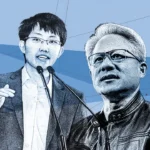
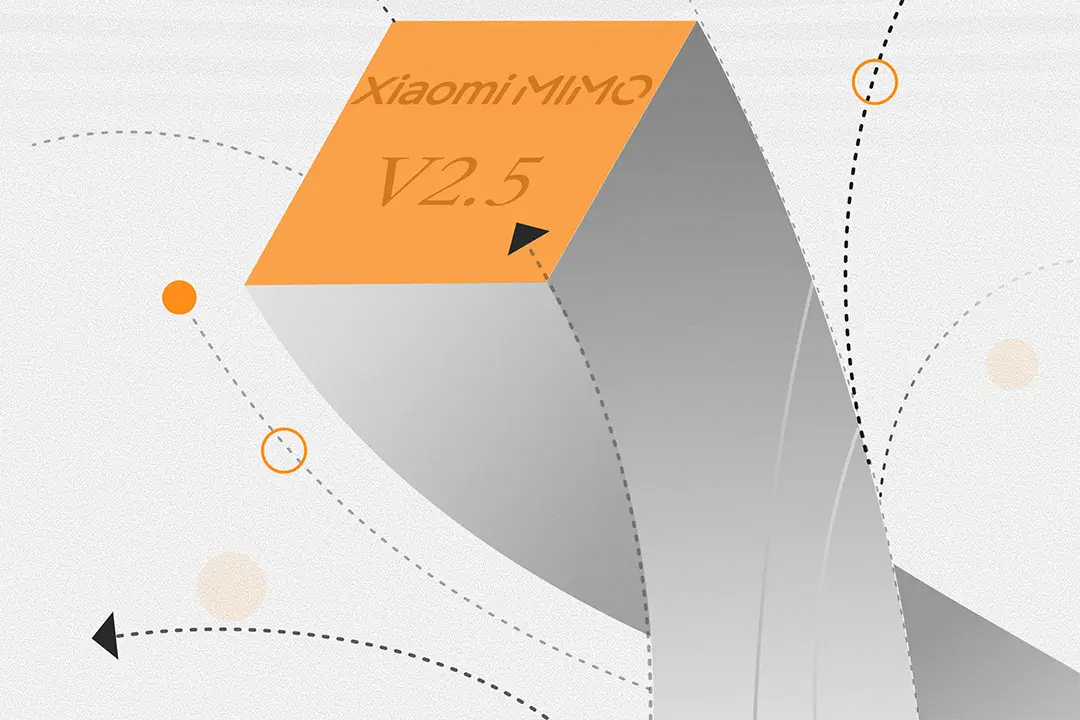
Shortly after, Xiaomi rushed out its MiMo-V2.5 model series. Led by former DeepSeek core member Luo Fuli, the team claimed that its model excels in long-duration agent tasks while offering a 42% reduction in token usage compared with Moonshot’s K2.6. As an example of its capability, the company says MiMo-V2.5-Pro generated a playable 3D fighting game in minutes by writing 1,123 lines of code. Xiaomi also simplified its token pricing structure, introducing nighttime discounts and automated renewals to appease users who complained previous plans were too expensive.
Nevertheless, fully delegating tasks to these agents remains risky. Geek Park points out that leaving Kimi K2.6 to operate independently for an hour to generate comprehensive industry reports exposes a critical flaw: a lack of midpoint course correction. If the AI misinterprets the initial direction, users are left waiting a long time only to receive polished but entirely worthless results.
Expanding into performance and workflows
Beyond office productivity, AI is aggressively targeting real-time visual interaction. Anuttacon — an AI firm founded by Cai Haoyu, co-founder of the Chinese gaming giant miHoYo — recently launched a video model called LPM-1.0. The company introduced a play on words, changing the traditional large language model acronym LLM into LPM — large performance model.
Instead of generating static, pre-scripted videos, LPM-1.0 acts as a visual engine for virtual characters. It utilizes “full-duplex” interaction, meaning the AI processes listening and speaking audio streams simultaneously by dedicating alternating internal network layers to different audio tracks. According to Geek Park, this allows a virtual avatar to react instantly to a user’s speech with continuous nods, blinks, and micro-expressions. This bridges the gap to the gaming firm’s grand vision of creating a virtual world for a billion people by 2030, though the model currently relies heavily on an external “brain” — like ChatGPT or other foundational language models — for its underlying logic.
The shifting definition of AI leadership
While Chinese startups push boundaries in agent orchestration and real-time avatars, the leading American developers are engaged in a fierce battle over software engineering environments.
On April 16, Anthropic released Claude Opus 4.7. The company claims a 13% performance boost on coding benchmarks over its predecessor. However, Tencent Tech noted immediate pushback from developers who found the model rigid, often producing lower-quality work on non-coding tasks like research.
OpenAI updated its Codex platform the same day. Moving beyond simple code generation, the company turned Codex into an integrated desktop workstation. The new system can observe screens, run parallel background operations, and seamlessly connect with over 100 workplace applications.
a niche but increasingly cited benchmark
These rapid functional shifts highlight why evaluating and ranking AI models is becoming increasingly difficult. To assess overall foundational capabilities, “Humanity’s Last Exam” — a niche, tough, but increasingly cited benchmark of expert-vetted questions — may provide a relatively objective and wide-angled view. According to the latest test by Artificialanalysis.ai, Google’s Gemini 3.1 Pro remains the leader in complex academic knowledge with a score of 44.7%, followed by OpenAI’s GPT-5.4 at 41.6%. Anthropic’s new Opus 4.7 scored 39.6%.
Among the new Chinese entrants, Moonshot’s K2.6 scored 35.9% — placing it very close to Claude Opus 4.6’s 36.7% — while Xiaomi’s MiMo-V2.5-Pro posted 33.8%. While far from the absolute lead, the latter is a highly respectable score for a smartphone manufacturer and a relatively new model series. Ultimately, as the battlefield moves from raw text intelligence to practical, multi-platform utility, crowning a definitive winner in the AI race is no longer a simple equation.
Sources: