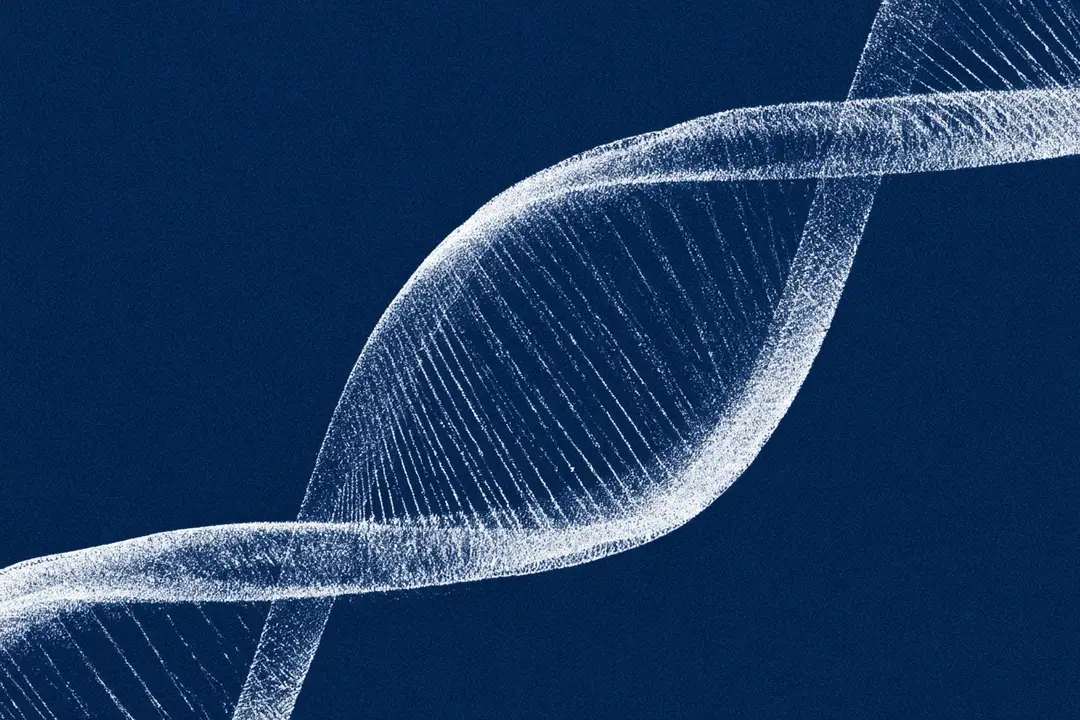
The unauthorized trial of a customized base-editing treatment on a six-year-old girl exposes severe compliance gaps and tests China’s new biomedical regulations.
By Da Cheung
The tragic death of a 6-year-old girl in Shanghai following an unauthorized experimental gene-editing treatment has been thrust into the international spotlight after being kept hidden for 16 months. The incident, which happened in March 2025, is now under investigation by the Shanghai Jiao Tong University School of Medicine and exposes critical ethical and regulatory gaps in the global race to commercialize cutting-edge biotechnology.
The young patient suffered from Snijders Blok–Campeau syndrome, a rare neurodevelopmental disorder caused by a mutation in the CHD3 gene. Although the condition leads to severe cognitive and speech delays, it is not typically life-threatening. The child’s condition was fairly mild, but her family sought a cure and raised 5.82 million yuan ($860,000) to part fund an experimental treatment utilizing base editing — an advanced form of CRISPR technology designed to rewrite targeted DNA sequences.
To deliver the gene-editing machinery, researchers infused high doses of adeno-associated viruses (AAVs) — a standard vector in gene therapy — directly into the child’s cerebrospinal fluid via a lumbar puncture, giving the treatment access to her central nervous system. The procedure was carried out at Shanghai Xinhua hospital. However, administering AAVs at high concentrations carries well-documented risks of triggering severe, potentially fatal immune responses.
Bypassing safeguards and ignoring safety signals
Medical records and expert reviews indicate the research team, led by neuroscientist Qiu Zilong from Shanghai Jiao Tong University, and Shanghai Xinhua Hospital ignored crucial safety and toxicological warnings. The hospital’s ethics committee approved the trial on Jan. 2, 2025. However, a preclinical primate safety report from the contract research organization PriMed was not completed until Feb. 17. That report revealed that monkeys receiving identical vector doses developed acute liver and one developed kidney damage.
Despite these red flags, the team administered the viral infusion on March 24, 2025. Three days later, the girl developed a high fever and severe kidney damage. She died within a week from thrombotic microangiopathy — a condition characterized by systemic microscopic blood clots linked to high-dose viral vector delivery.
The trial also allegedly involved significant financial irregularities, and the handling of the family’s payment is now one of the subjects of conflicting claims. Money allegedly bypassed official institutional accounts, with funds diverted to other destinations including a student’s personal account. Furthermore, the informed consent documents reportedly identified Shanghai-registered Lanqi Xintu Gene Technology as the sponsor, contradicting the reality of the family’s out-of-pocket payments.
Scientific integrity under fire
The fallout extends beyond the hospital and the treatment to the integrity of the team’s scientific output. In February 2026, Qiu’s team published a paper in the prestigious journal Nature, showcasing the success of base-editing in mice and monkeys. The paper made no mention of the human trial, the patient’s death, or the family’s financial sponsorship.
Following an investigative report published on July 23 by Science magazine in collaboration with Retraction Watch that revealed the whole story, Nature issued an official Editor’s Note of Concern on July 29, alerting the scientific community that the paper’s underlying data and disclosure integrity were under formal review. Separately, Geng Tongxue Jiang Gushi — the social media account of a team led by science influencer Geng Hongwei, who covers research misconduct in China — published allegations of data fabrication within the Nature paper. This allegation of scientific misconduct remains under review.
Notably, as early as 2019, research by Qiu Zilong’s team on treating autism with gene-editing technology was questioned by renowned science misconduct watchdog Fang Zhouzi, who pointed out problems with the research’s technical foundation and subjects.
The scandal highlights systemic vulnerabilities in China’s regulation of investigator-initiated trials. Under current National Health Commission frameworks, hospital ethics committees hold primary oversight of single-patient custom treatments, creating regulatory loopholes that allow clinical experiments to proceed without centralized approvals from China’s National Medical Products Administration (NMPA).
The tragedy appears driven by academic ambition rather than patient welfare. As the independent industry observer Amino Observation noted: “Looking back, the core of this tragedy is not simply technical risk, but the research team chasing the academic halo of the ‘first brain gene editing,’ leading to multiple clinical procedural violations and overlapping compliance loopholes that ultimately resulted in irreversible consequences.”
Industry insiders also point out that the financial support provided by the child’s parents may have been one of the reasons Qiu suddenly pivoted from autism to Snijders Blok-Campeau syndrome and provided a customized therapy for the patient.
A watershed moment for China’s biotech ambitions
The incident is drawing comparisons to the 1999 death of Jesse Gelsinger in a U.S. gene therapy trial — a watershed moment that forced the American biotech industry to overhaul its safety protocols and resulted in severe penalties for researchers who hid animal toxicity data. For China, this case tests the enforcement of its regulatory framework for emerging medical technologies.
The trial was conducted under an Investigator-Initiated Trial (IIT) pathway, which allows hospitals to test novel therapies without the rigorous national drug regulatory approval required for commercial pharmaceuticals. Following the child’s death, local health authorities fined Xinhua Hospital just 24,000 yuan in September 2025 for failing to properly oversee and register the trial. Critics argue this penalty is vastly disproportionate to the loss of life and the family’s financial investment.
However, the regulatory landscape is shifting. Defenders of China’s medical oversight system argue that the researchers violated existing 2021 guidelines, and the government has since tightened controls. On May 1, 2026, stringent new biomedical regulations known as Order 818 went into effect that basically created a dual-track framework. The rules state that non-clinical safety studies, including animal toxicology, must demonstrate safety and effectiveness before human trials and strictly prohibit charging patients for experimental treatments during early clinical research, although they allow hospitals to legally charge patients for personalized cell and gene therapies, once approved for “clinical translation,” without needing full NMPA drug approval. It also imposes severe penalties for ethical and regulatory violations, including long-term or even lifetime bans from biomedical research and fines that can reach or exceed 10 million yuan.
Whether these new safeguards can prevent future tragedies remains to be seen. As the university’s investigation unfolds, the global scientific community is watching closely to see if China will hold its researchers accountable and prioritize patient safety over the race for technological breakthroughs.
Sources: