

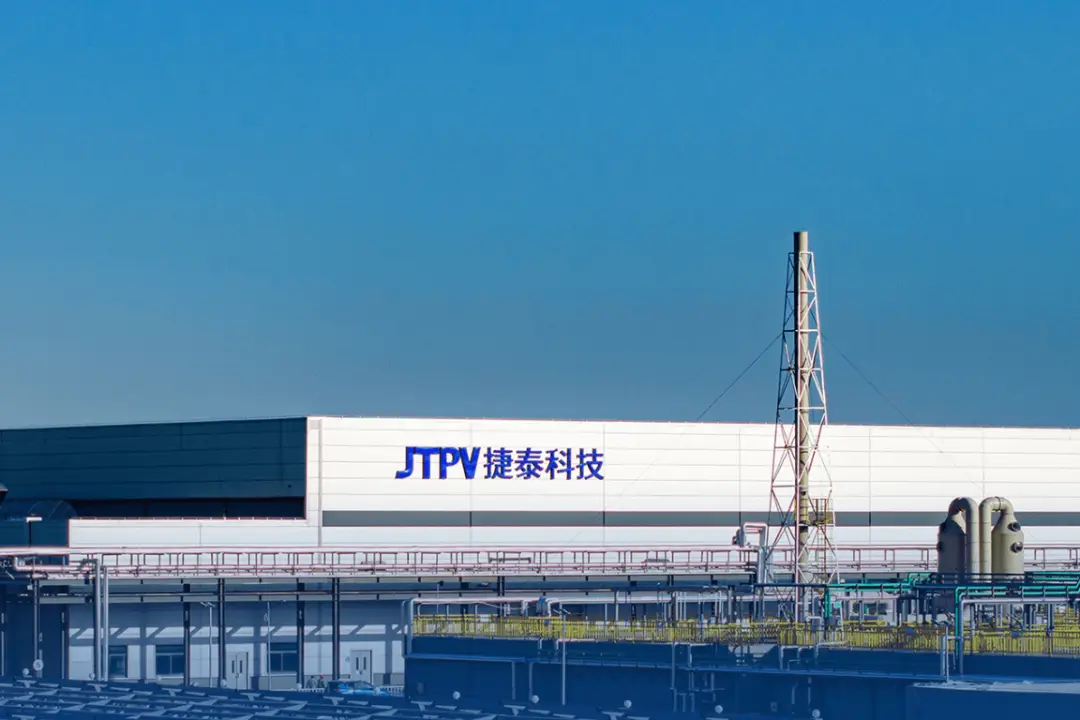
Chinese solar cell maker cites Middle East conflict, tariff uncertainty and Beijing’s technology export restrictions as it pulls the plug on overseas expansion.
By Doug Young
A combination of geopolitical tensions, trade uncertainty and tighter Chinese technology export controls has prompted Hainan Drinda New Energy Technology (2865.HK) (002865.SZ) to abandon plans for a $280 million solar cell manufacturing plant in Oman.
The decision, announced on Nov. 12, is the latest setback for Chinese solar manufacturers seeking to establish overseas production bases to get closer to customers and circumvent trade barriers targeting products made in China.
Drinda’s decision reflects several overlapping challenges rather than a single obstacle. Oman is close to the centre of the conflict engulfing the Middle East, although its location outside the Strait of Hormuz offers some protection from disruptions around the strategic shipping chokepoint.
The company, which markets its products internationally under the brand Jietai Solar (JTPV), also faces growing uncertainty over tariffs. The U.S. and Europe are increasingly targeting solar panels and related materials produced by Chinese companies, including goods manufactured outside China. Western governments have previously justified punitive duties by citing unfair state support for Chinese manufacturers, prompting some companies to move production overseas in an effort to avoid trade restrictions.
Beijing, meanwhile, is tightening controls on the export of advanced technologies. In its announcement, Drinda cited proposed revisions to China’s Catalogue of Technologies Prohibited and Restricted from Export, published by the Ministry of Commerce in October. The changes would bring certain solar-related technologies under tighter export restrictions.
The company had already signalled difficulties with the Oman project in its interim report in August, citing the complex international trade environment, changing tariff policies, and rising geopolitical uncertainty in the Middle East.
At the time, Drinda said the original implementation plan had been affected and that it would adjust the project according to changing conditions. That reassessment has now resulted in formal cancellation, approved by the board on Thursday.
IPO proceeds redirected to domestic operations
The proposed facility was designed to produce 5 GW of solar cells annually, adding to Drinda’s existing 40 GW of capacity at two factories in Jiangsu and Anhui provinces.
The Oman project was also the principal intended use of funds raised through the company’s Hong Kong listing in May 2025. Drinda earmarked approximately three-quarters of the HK$1.3 billion ($166 million) in net IPO proceeds for the factory, with HK$970 million allocated to the project. Most of that money remains unspent and will now be redirected.
Under the revised allocation, HK$578 million will fund research and development of photovoltaic cell products, technological upgrades and production-line improvements. Another HK$289 million will be used for strategic procurement of raw materials, including silver paste and silicon wafers, whose prices have been volatile. The remaining HK$96 million will replenish working capital.
Solar industry downturn shows signs of easing
Drinda’s Hong Kong-listed shares fell 6.3% in morning trading on Nov. 13, following an 8.1% gain the previous day that possibly reflected relief over market speculation that the troubled project would be abandoned.
The company has more immediate challenges at home. China’s solar industry is enduring one of its worst downturns following years of excessive investment across the photovoltaic supply chain. The resulting overcapacity has driven prices sharply lower since 2023.
Drinda’s financial performance illustrates the severity of the slump. Revenue fell to 7.63 billion yuan ($1.14 billion) in 2025, less than half its 2023 peak of 18.7 billion yuan. The company moved into the red in 2024, recording a loss of 591 million yuan, which widened to 1.42 billion yuan last year. It produced 28.9 GW of solar cells in 2025, leaving a substantial proportion of its manufacturing capacity unused.
Conditions have begun to stabilize as Beijing intervenes to address overcapacity, encouraging manufacturers to retire older production facilities and pushing smaller, less competitive players out of the market.
Drinda’s first-half results offered some evidence of improvement. Revenue fell 14% year-on-year to 3.15 billion yuan, compared with a 23% decline for the whole of 2025. Its net loss was also broadly stable, narrowing slightly to 261 million yuan from 264 million yuan a year earlier.
Recent pricing trends suggest the recovery may be gaining traction. Solar panel manufacturer JinkoSolar (JKS.US) (688223.SH) and polysilicon producer Daqo (DQ.US) (688303.SH) both reported higher product prices in the third quarter than in the second.
Analysts expect Drinda to return to revenue growth in the second half of 2026. All six analysts covering its Shenzhen-listed shares currently rate the stock a buy or strong buy.
Overseas expansion loses momentum
Drinda is not alone in reconsidering overseas manufacturing ambitions. A June 2026 report by energy-market intelligence provider OPIS identified two major Chinese photovoltaic manufacturing projects in the Middle East that had largely stalled. One appeared to be Drinda’s Oman venture, while the other involved a producer of silicon ingots and wafers.
Chinese companies have also abandoned several proposed solar manufacturing investments in the U.S. The decisions followed Washington’s announcement last year that products from U.S.-based factories with Chinese links would not qualify for government subsidies.
The combination of Western trade barriers and Beijing’s restrictions on technology exports is therefore complicating the overseas expansion strategies of Chinese solar manufacturers.
For Drinda and its peers, however, the retreat may not be entirely negative. With China’s solar industry showing early signs of recovery, avoiding expensive overseas projects exposed to geopolitical and regulatory risks could prove a more prudent use of capital.
Source:
Bamboo Works
To subscribe to Bamboo Works weekly free newsletter, click here
