

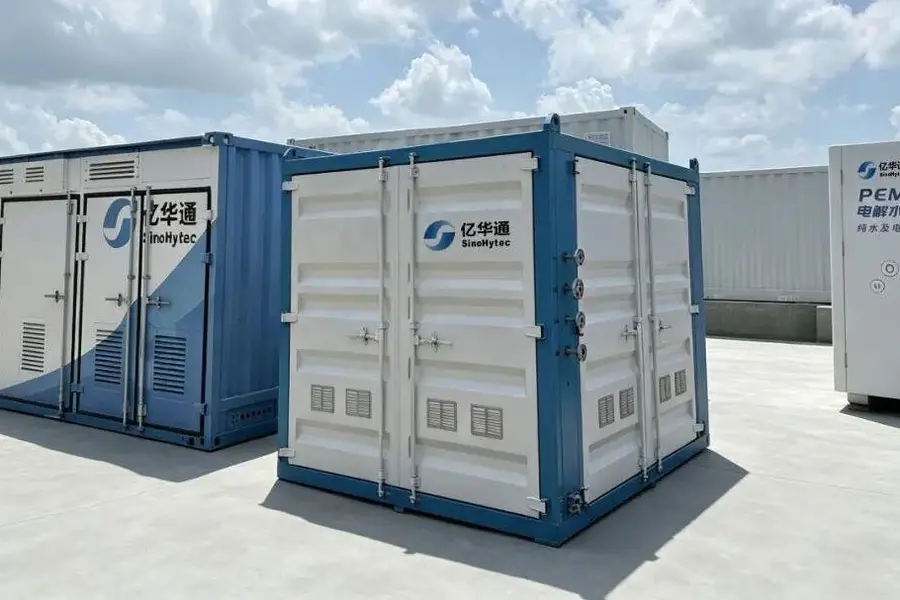
The fuel cell maker is redirecting IPO proceeds toward debt repayment and working capital as sluggish hydrogen vehicle sales force a strategic rethink.
By Doug Young
Beijing SinoHytec (2402.HK) (688339.SH) is scaling back its ambitions in hydrogen fuel cell development as China’s hydrogen vehicle market falls far short of earlier growth expectations. The company is redirecting 300 million yuan ($44.9 million) of unspent IPO proceeds toward debt repayment and working capital, while exploring hydrogen-powered energy storage as an alternative source of revenue.
The shift underscores the mounting pressure on China’s hydrogen technology companies, many of which went public during a wave of investor enthusiasm in 2022 and 2023. With demand for hydrogen vehicles developing more slowly than anticipated, SinoHytec is moving from expansion toward financial consolidation.
The company announced the revised allocation of its IPO funds on Nov. 5. It also said it was expanding the scope of its research and development spending to cover diversified applications of its hydrogen technology, including energy storage systems.
Hydrogen vehicle forecasts fall sharply
China’s hydrogen vehicle industry has struggled to deliver on the growth projections that supported investment in the sector. Government incentives and policies promoting new energy vehicles had boosted expectations of a rapid expansion in fuel cell vehicle production.
When Sino-Synergy Hydrogen Energy (9663.HK) listed in 2023, its prospectus cited third-party research forecasting that sales in China of hydrogen fuel cell vehicles would reach 150,400 units in 2027 and 412,400 in 2030.
More recent projections paint a substantially weaker picture. A report by SNE Research last month forecast sales of just 38,000 units in 2030, less than 10% of the earlier estimate.
The divergence highlights how the industry’s development has fallen behind expectations, leaving manufacturers facing shrinking revenues and diminishing investor confidence.
SinoHytec’s share price reflects the deterioration. Its stock closed at HK$7.98 ($1.02) on Nov. 6, down 87% from its HK$60 IPO price. Hong Kong-listed peers Guofu Hydrogen (2582.HK), Refire Group (2570.HK) and Sino-Synergy have suffered even steeper declines, with all three losing more than 90% of their value since listing.
IPO proceeds redirected toward financial stability
SinoHytec raised approximately HK$1 billion ($128 million) in its January 2023 IPO. Almost four years later, about 655 million yuan of the proceeds remained unspent, according to its latest announcement.
The revised funding plan sharply reduces investment in product development and marketing. Planned spending on new product research and development has been cut to 121 million yuan from 445 million yuan, while the allocation for product marketing and promotion has fallen to 14 million yuan from 133 million yuan.
Instead, the company will redirect 150 million yuan toward repaying bank loans and another 150 million yuan toward general working capital.
SinoHytec has 394 million yuan in bank loans coming due within the next year. The additional working capital will help fund daily operations, following the exhaustion of the 112 million yuan originally allocated for that purpose in its IPO plan.
The company said the original spending priorities reflected its assessment of market demand at the time of listing. Since then, changes in the operating environment have altered the pace and priorities of its planned investments.
Another 220 million yuan previously earmarked for overseas research and development of hydrogen vehicle systems will now cover diversified applications of the company’s technology, an apparent reference to energy storage.
Energy storage offers an uncertain alternative
Energy storage has emerged as a potential growth area for SinoHytec, particularly as demand for power infrastructure rises alongside the expansion of artificial intelligence data centers.
The company’s first-half results offered some initial evidence of progress. Revenue increased 2.8% year-on-year to 73.9 million yuan, ending two years of steep declines. In 2025, revenue fell 29% to 259 million yuan.
However, the core hydrogen fuel cell systems business continued to contract. Revenue from the segment dropped 15.5% to 42.8 million yuan in the first half, accounting for 58% of total sales. SinoHytec attributed the weakness partly to a 60% year-on-year decline in Chinese hydrogen fuel cell vehicle production, which totaled just 500 units during the period.
The decline was offset by a 72% increase in revenue from other businesses, which reached 18.2 million yuan as the company delivered more energy storage products.
SinoHytec also narrowed its net loss to 105 million yuan from 165 million yuan a year earlier, largely through cost controls.
The company’s pivot nevertheless remains unproven. Although energy storage provides a possible avenue for diversifying away from the struggling hydrogen vehicle market, its current contribution is insufficient to demonstrate that it can offset the contraction in the core business.
The redeployment of IPO proceeds signals a more defensive strategy as SinoHytec confronts weak demand and mounting financial pressure. Whether energy storage can become a meaningful growth engine will depend on the company’s ability to translate early deliveries into sustained sales. Until then, a recovery in its share price appears difficult to justify.
Source:
Bamboo Works
To subscribe to Bamboo Works weekly free newsletter, click here