
The world’s top industrial sewing machine maker unveils a 308,000-yuan humanoid, betting automation can fill a labor gap that has left garment factories short-staffed.
By Yi Yuqin
China’s clothing manufacturers are struggling to recruit young workers for factory production lines. Now Jack Technology (603337.SH), the world’s leading industrial sewing machine maker, is betting humanoid robots can help fill the gap.
The company has ranked No. 1 globally for 16 consecutive years, according to Frost & Sullivan, and generated nearly 6.6 billion yuan ($991 million) in revenue in 2025. It is now applying its manufacturing expertise to robotics.
“Young people are increasingly unwilling to work in factories. Even when we recruit them, they may leave within a month,” said Ruan Jixiang, Jack Technology’s founder and chairman.
China’s textile industry faces labor shortages of 10%-30%, with clothing manufacturers suffering a supply shortfall of 20%-30%, according to the China National Textile and Apparel Council. The average age of migrant workers was 43.3 in 2025, while those aged 21-30 accounted for just 15.8% of the total, down from 21.1% in 2020, government data show.
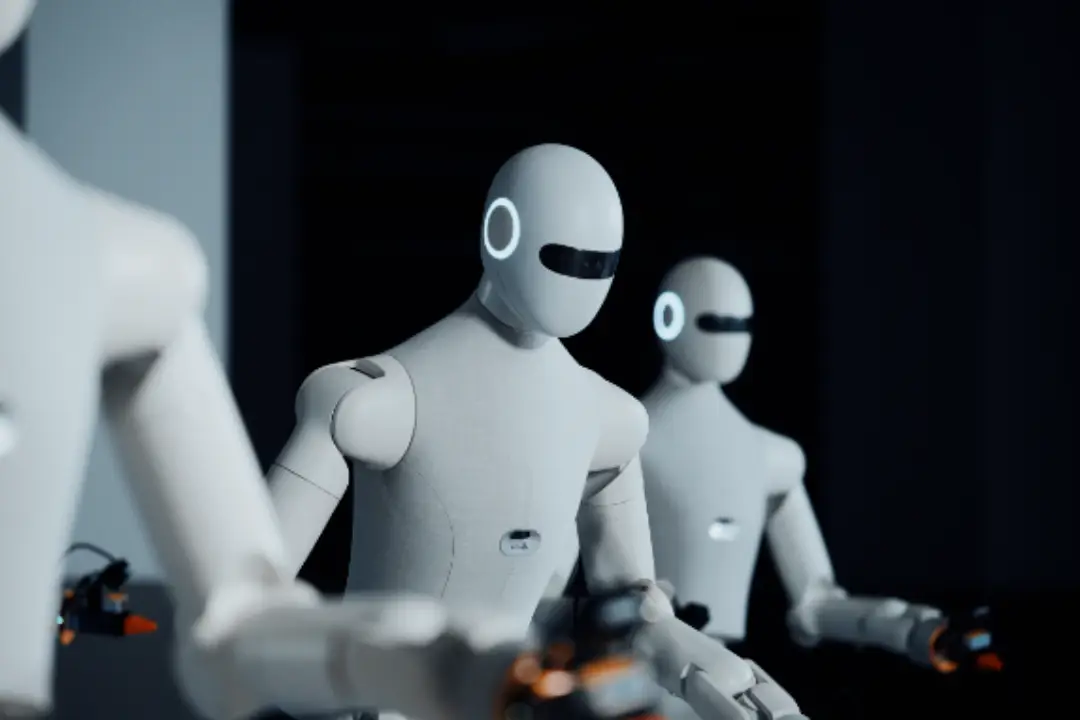
Faced with this shift, Jack Technology subsidiary Aitu Technology unveiled Aini, a humanoid sewing robot, on Oct. 28, alongside an integrated robotic production line system called Production Line King.
From 40 workers to 12
At a shirt production line operated by Sunrise Manufacture Group (605138.SH), seven Aini robots pick up fabric pieces, smooth and align them, and feed them into sewing machines.
Combined with automated cutting and material distribution, the system has reduced staffing requirements from 40 workers to 12, according to Aitu. Operating 20 hours a day, the line can produce 1,000 plain shirts — a 70% reduction in labor requirements at the same output.
Ruan identifies three pressures on clothing manufacturers: a shrinking pool of young workers, rising labor costs relative to selling prices, and the shift towards smaller, faster-turnaround orders.
The industry’s financial performance shows the strain. Revenue at China’s major clothing manufacturers fell 12.7% in 2025, while profits dropped 27.3%, leaving an average operating margin of just 4.05%, according to the textile industry association.
Although industrial sewing machines can stitch fabric quickly and precisely, handling, smoothing, turning, and aligning the material still largely requires human hands. Robots capable of taking over these tasks could connect existing automated equipment and reduce factories’ dependence on skilled workers.
The challenge of handling fabric
Soft, flexible materials are notoriously difficult for robots to manipulate. Fabric can slip, wrinkle or change shape with slight variations in handling pressure, while different materials require different techniques.
U.S. robotics company Sewbo illustrated the problem in 2016 by developing a method to temporarily stiffen fabric so a robot could sew it, before restoring its flexibility.
Aitu has spent four years collecting production data and training models to tackle the challenge. Its system combines visual and tactile sensing to identify fabric characteristics, adjust gripping force and respond to wrinkles and misalignment.
The company says its model has 5 billion parameters and was trained on approximately 100,000 hours of practical sewing data.
Ruan said Aini’s success rate when handling conventional fabrics has reached 93%-99%. During production tests at Shanghai-headquartered Chenfeng Group, it completed five operations, including sewing shirt collars, cuffs and pockets, making buttonholes and attaching buttons. Its overall success rate was 90%-96%, with alignment accuracy of plus or minus 0.5 millimeters.
But performance varies significantly between tasks. Special materials such as mesh fabric, as well as more complex operations involving three-dimensional sewing and folding, remain difficult.
Another obstacle is the constant variation in clothing production. A robot trained to sew shirts cannot necessarily switch immediately to trousers, jackets or different fabrics.
Ruan identifies limited generalization — the ability to transfer learned skills to unfamiliar tasks — as the biggest obstacle to wider adoption. Aini still requires technicians to handle initial setup, parameter adjustments and problems during production. He expects its operating speed on some mainstream production lines to reach human levels by the first half of 2027.
The humanoid design is intended to make integration easier by allowing robots to use existing sewing machines and workstations, reducing factory modification costs.
Is 308,000 yuan for a robot worker worth it?
Aini is priced at 308,000 yuan, below the 500,000-600,000 yuan or more typically charged for humanoid robots capable of industrial work.
The purchase price is equivalent to roughly five years of wages for a manufacturing migrant worker, based on the National Bureau of Statistics’ 2025 monthly average of 5,126 yuan.
Aitu estimates a payback period of around two years in regions with moderate labor costs, falling to 18 months in higher-cost locations. Ruan believes factories running three shifts could potentially recover the investment within a year.
A two-year payback would require each robot to generate net savings of approximately 12,800 yuan a month.
Large manufacturers with stable orders and standardized production are better positioned to achieve this. Smaller factories, facing fluctuating demand and frequent product changes, may struggle to keep robots operating efficiently. Deployment, maintenance and software adaptation also add to the cost.
Aitu has announced partnerships with clothing manufacturers including Chenfeng Group, Lutai, Peacebird, Liantai and Xinya. But Ruan acknowledged that deliveries remain at an early stage, with the next challenge being to replicate demonstration projects across more factories.
Jack Technology also plans to extend its robotics business into luggage, automotive seats and bras, according to its 2026 interim report. These industries share similar challenges involving flexible materials.
However, the company warned investors on Oct. 29 that its robotics products remained at an early stage of commercialization, contributing very little to revenue or profit, with large-scale adoption still uncertain.
The demand for automation is real, but moving from factory demonstrations to widespread adoption will require robots that are affordable, reliable and adaptable. Whether they can replace human hands on a commercial scale will ultimately be decided on the production line.
Source:
AGI Jiekou via huxiu