

The massive 2.8-trillion-parameter model closes gaps with frontier competitors, signaling an end to aggressive AI price cuts and a shift to performance and applications.
By Da Cheung
Beijing-based Moonshot AI on July 16 unveiled Kimi K3, an artificial intelligence model that not only challenges some of the world’s leading frontier models — the most advanced AI systems developed by companies such as OpenAI and Anthropic — but may also signal a shift in how China’s AI developers compete.
Rather than relying primarily on aggressive price cuts to win market share, Moonshot is positioning K3 as a premium model aimed at developers and enterprise customers. If other leading Chinese AI companies follow suit, the industry’s next phase could be defined less by low prices than by competition over performance and industrial applications.
K3 boasts 2.8 trillion parameters, making it one of the largest AI models ever developed. Its trained weights — the parameters it learned during training that determine how the AI responds to inputs — are scheduled to be released by late July. If that happens as planned, K3 will become the world’s largest open-weight AI model, meaning developers can download, modify and build on the model, unlike closed models such as GPT-5.x, Claude, and Gemini, which do not release their weights and are only available through hosted services or application programming interfaces.
Independent benchmark tests suggest K3 performs close to leading second-tier models — highly capable systems that sit just below the very latest flagship releases — although most reviewers stop short of placing it ahead of Anthropic’s newest Claude models or OpenAI’s latest offerings.
A powerful overachiever
Before its official release, K3 appeared on an anonymous testing platform under the name Kivine, where it quickly gained a reputation for generating sophisticated web pages, 3D scenes and mini-games from simple text prompts.
Early excitement on Chinese social media claimed the model had matched or surpassed Anthropic’s Claude Fable 5. Independent reviewers have been more restrained. According to the Chinese technology blog Guicang’s AI Toolbox, K3 is a highly capable model but does not outperform Claude Fable 5 or OpenAI’s GPT-5.6 Sol. Instead, it performs broadly in line with the slightly older Claude Opus 4.8.
One characteristic repeatedly highlighted by reviewers is K3’s tendency to go beyond a user’s instructions and overdeliver. When asked to code a simple static 3D scene, the model instead built a fully animated real-time environment. In another test by technology publication DeepTech, K3 added sound effects and collision animations to a digital billiards game without being instructed to do so.
That initiative, however, comes with trade-offs. DeepTech found that K3’s habit of expanding tasks slowed response times and produced code that was more difficult for developers to modify. Moonshot AI itself acknowledges the issue, describing K3 as “too proactive” when user instructions are vague. In some complex gaming tests, the model reportedly took nearly an hour to complete its response.
Built for complex tasks
K3 uses a Mixture of Experts architecture, an approach that divides an AI model into many specialist subnetworks, or “experts,” while activating only a small fraction of them for any given task, making the model more computationally efficient. K3 has 896 of these subnetworks but activates only 16 for each task, which reduces computing requirements and costs without sacrificing overall capability.
The model also includes native visual understanding, meaning it can interpret images and videos directly alongside text rather than first converting them into text descriptions. According to Guicang’s AI Toolbox, K3 can extract three-dimensional structures from video, generate code for visual interfaces, capture screenshots of its own output, identify visual errors and rewrite its code to correct them.
Moonshot AI has highlighted these autonomous capabilities in its marketing. In one company demonstration, K3 reportedly operated continuously for 48 hours to design and optimize a semiconductor chip using open-source electronic design automation tools and a 45-nanometer process library. The resulting simulated chip was designed to run a smaller version of K3 itself and achieved a simulated decoding speed of more than 8,700 tokens per second — with tokens being the chunks of text AI models process and generate — an exceptionally high throughput for a model of its size, although the result has not been independently verified.
Reviewers caution that such demonstrations illustrate the model’s theoretical limits rather than its day-to-day reliability. Technology outlet Silicon Planet Pro notes there is still little evidence of how K3 performs in real enterprise environments, such as maintaining large legacy software systems or collaborating with teams of human developers.
The end of China’s AI price wars?
The most significant implication of K3 may be less about its technical specifications than its pricing.
Earlier this year, Chinese AI developers including DeepSeek and Moonshot AI disrupted the market by offering highly capable models at exceptionally low prices, triggering an intense domestic price war that also put pressure on international competitors.
K3 marks a notable change in strategy for Moonshot AI. The company has priced output generation at 100 yuan (about $14) per million tokens, roughly four times the cost of its previous coding model. While still competitive with some leading frontier models, the pricing suggests Moonshot AI is increasingly targeting enterprise customers willing to pay for higher performance rather than competing primarily on cost.
Chinese reviewers are divided over whether the higher price is justified. Silicon Planet Pro argues that Moonshot AI has abandoned its previous strategy of undercutting competitors in favour of frontier-model pricing. Guicang’s AI Toolboxreaches the opposite conclusion, arguing that performance comparable to Claude Opus 4.8 at a substantially lower cost than GPT-5.6 Sol still represents strong value for developers.
Moonshot AI may not be alone. Alibaba has increasingly emphasized the capabilities of its latest Qwen models, while other leading Chinese AI developers are also placing greater emphasis on enterprise deployments and advanced reasoning performance rather than competing solely on price. Although pricing remains fiercely competitive, the industry’s focus appears to be broadening beyond simply offering the cheapest models.
Whether K3 ultimately lives up to its promise remains to be seen. But its launch suggests that for at least some of China’s leading AI companies, the next stage of competition may be determined less by who can build the cheapest model and more by who can persuade businesses that their AI is capable of solving increasingly complex real-world problems.
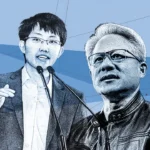
Feature photo: Moonshot AI founder, Yang Zhilin, by Moonshot AI
Sources: