
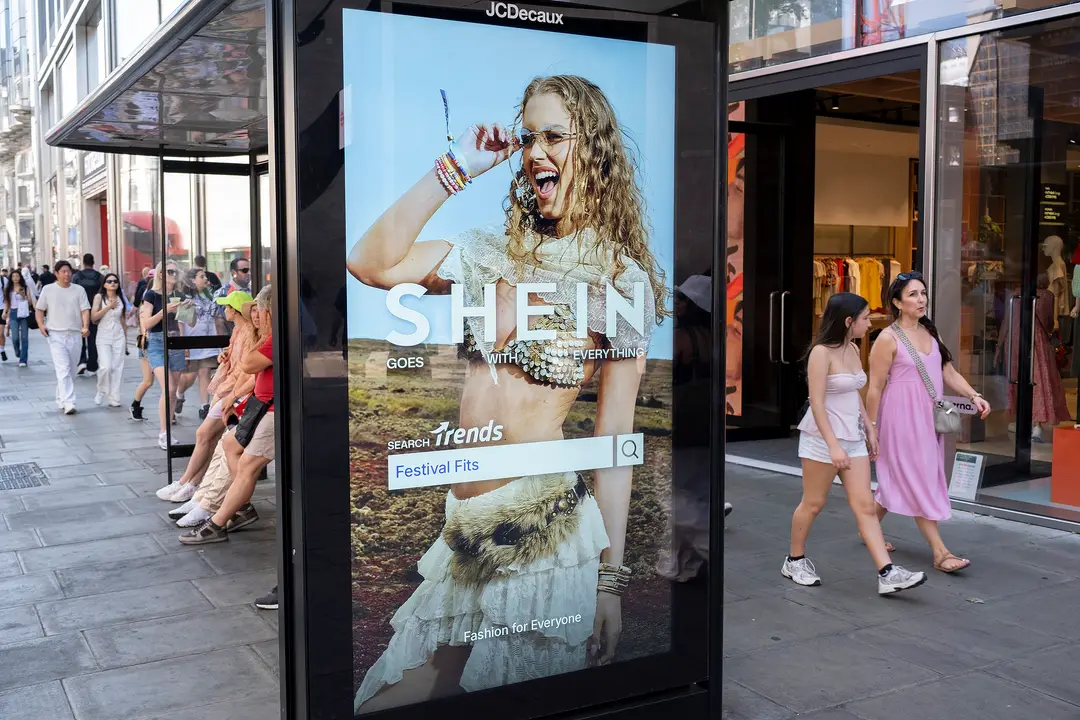
As SHEIN gears up for a Hong Kong listing investors are increasingly focused on whether its data-driven supply chain can withstand rising regulatory and compliance costs.
SHEIN‘s long-delayed public listing has entered a new phase after China’s securities regulator approved the fast-fashion group’s plan to sell up to 341.6 million shares in Hong Kong, setting the stage for one of the city’s most closely watched technology listings.
The filing, disclosed by the China Securities Regulatory Commission on July 10, marks a significant milestone after earlier attempts to list in the U.S. and London failed to materialize.
The Hong Kong IPO comes as investors reassess the company’s business model. Rather than focusing solely on its ability to sell low-cost clothing globally, the market is increasingly examining whether SHEIN’s real competitive advantage—its ability to minimize inventory risk through data-driven production—can continue to generate profits as regulatory scrutiny intensifies.
That question has become more important as the company, which was founded in Nanjing in 2008, expands beyond its own fashion labels into a broader marketplace for third-party merchants while facing rising compliance costs in its largest overseas markets.
Turning demand forecasts into real-time testing
The apparel industry has traditionally relied on forecasting consumer demand months before products reach stores. Brands commit to large production runs based on predictions of styles, colors and sizes, leaving them vulnerable to markdowns and excess inventory when demand falls short.
SHEIN’s approach reverses that process. Instead of manufacturing large volumes upfront, the company launches thousands of products in very small batches, using real-time sales, browsing and customer feedback to determine which items deserve larger production runs. Products that perform poorly are quickly discontinued.
The strategy, widely known in China as “small-order, rapid-response” manufacturing, reduces the cost of forecasting errors by turning demand prediction into continuous testing.
That system has enabled SHEIN, which is now headquartered in Singapore, to offer an unusually large number of styles while keeping inventory relatively lean, helping distinguish it from traditional fast-fashion retailers.
The company’s broader supply chain is also organized differently. Rather than owning factories, SHEIN coordinates a network of external manufacturers through digital systems that manage orders, production schedules, quality control and deliveries. The model gives the company significant operational control without heavy ownership of manufacturing assets.
Marketplace expansion brings new challenges
SHEIN is also evolving beyond a vertically integrated retailer.
Since launching its global Marketplace in 2023, the company has begun allowing third-party merchants to sell alongside SHEIN-branded products. The move could diversify revenue beyond merchandise sales into logistics, advertising, seller services and supply chain support.
However, becoming a platform also exposes SHEIN to new regulatory risks. European regulators have increased scrutiny of online marketplaces over product safety, counterfeit goods, consumer protection and compliance with the EU’s Digital Services Act. Managing third-party sellers will require stronger governance than operating a business based primarily on proprietary brands.
At the same time, the company’s operating environment is becoming more difficult. Changes to low-value import exemptions, tighter customs rules, greater scrutiny of labor standards and supply chain transparency, and growing environmental concerns about fast fashion are all increasing operating costs.
These pressures mean investors are placing greater emphasis on profitability, governance and regulatory compliance than they did during the company’s rapid private-market growth.
Valuation enters a new phase
SHEIN’s valuation has already reflected that shift.
The company was once widely discussed as a potential $100 billion business. A fundraising round in 2023 reportedly valued it at around $66 billion. More recent market expectations surrounding the Hong Kong IPO have generally ranged between $40 billion and $50 billion.
The lower valuation does not necessarily signal weakening fundamentals. Instead, it reflects a broader change in how investors value the company as it approaches public markets.
Private investors typically rewarded user growth and global expansion. Public market investors are expected to focus more heavily on cash generation, margins, supply chain resilience and the sustainability of growth under tighter regulation.
Whether SHEIN can maintain its competitive position will depend on how effectively it absorbs rising compliance and logistics costs without undermining the fast production cycles and low prices that have driven its global expansion.
Ultimately, investors are likely to judge the company less as a fast-fashion retailer than as a technology-enabled supply chain operator.
Its long-term value will depend not simply on selling inexpensive clothing, but on whether its data-driven manufacturing system can continue transforming fragmented global consumer demand into efficient production while adapting to a more demanding regulatory environment.
Source:
Damao Commercial Studio