
As the U.S., EU, and Latin America erect trade barriers, China’s rapid technological innovation threatens to outpace Western protectionism.
By Da Cheung
On Tuesday, the Trump administration banned imports of new foreign-made humanoid robots and power inverters, citing national security threats. The Federal Communications Commission (FCC) maintains that these devices — which are essential for data centers and solar panels — could be exploited by foreign governments for surveillance or grid sabotage.
The move highlights Washington’s anxiety over Chinese technology firms, which have rapidly developed advanced robotics and look set to start selling them ahead of U.S. competitors like Tesla and Boston Dynamics. The Chinese embassy in Washington dismissed the sanctions as “groundless pretexts.”
The U.S. is not acting alone. A coordinated global backlash is intensifying against China’s advanced manufacturing exports. From the European Union weaponizing procurement rules to Latin American nations erecting tariff barriers, the world is scrambling to protect local industries from a flood of Chinese green energy infrastructure, electric vehicles, and robots.
Europe reverses the historical playbook
In Europe, authorities are targeting the core of China’s renewable energy dominance. A new EU ban, which took effect in May 2026, prohibits publicly funded projects from using solar inverters and energy storage power conversion systems (PCS) made in China, Russia, Iran, and North Korea. Inverters and PCS are critical devices that convert and manage the flow of electricity between solar panels, batteries, and the power grid.
The ban directly cuts off Chinese suppliers from a 2 billion euro ($2.16 billion) European Investment Bank financing pool, according to Polaris Energy Storage Network. This poses a significant hurdle for dominant Chinese manufacturers in the European market, including and Sungrow Power Supply (300274.SZ), Huawei Digital Power, and GoodWe Technologies (688390.SH).
While the European Solar Manufacturing Council claims the West has ample manufacturing capacity to replace these imports, its assertion conflicts with broader industry concerns. Some EU member states fear that excluding Chinese technology will inevitably drive up inflation and energy costs.
More strikingly, the European Commission has proposed an Industrial Accelerator Act (IAA) that would force dominant foreign green-tech firms to transfer technology and meet local manufacturing quotas if they want to build factories or access lucrative state contracts in Europe. This mirrors the exact state-driven playbook Beijing used in the 1990s to build its own industrial might. The bidding process for the mammoth Three Gorges Dam project in 1996 required foreign bidders like Alstom and the German-Canadian-led Voith-General Electric-Siemens (VGS) consortium to partner with local firms, transfer core technology, and guarantee that 25% of their manufacturing took place in China. That policy allowed their Chinese state-owned partners, enterprises like Harbin Electric and Dongfang Electric, to leapfrog 30 years of technological gaps in just seven years. Now, the EU is attempting to use the same tactic against China.
Spillover effects hit the Global South
As the U.S. and Europe restrict access, Chinese manufacturers are diverting their massive production capacity to the Global South, creating severe spillover effects. Chinese exports to the U.S. fell by 20% last year, prompting companies to flood Latin America with low-priced e-commerce goods and autos, according to a report by the Associated Press.
Chinese automakers such as BYD (002594.SZ) (1211.HK) and Great Wall Motor (2333.HK) (601633.SH) have found a lucrative alternative market. In Brazil, the world’s sixth-largest auto market, Chinese brands accounted for more than 80% of electric vehicle sales in 2024 and 2025. Mexico has also surpassed Russia to become the largest single destination for Chinese auto exports, importing over 625,000 vehicles in 2025.
However, this influx has rankled developing nations trying to build their own globally competitive industries. Mexico, Chile, and Brazil have all recently raised tariffs to protect local manufacturing. Yet, these countries face a delicate balancing act. Because China is a major buyer of Latin American natural resources, governments are wary of pushing protectionist policies too far, fearing swift economic retaliation from Beijing.
Will the protectionist walls hold?
Despite the aggressive rollout of Western trade barriers, their long-term effectiveness remains highly uncertain. The EU’s proposed IAA is currently plagued by internal divisions, with countries like Germany and the Netherlands opposing the strict investment limits due to inflation risks.
Furthermore, legislative cycles are struggling to keep pace with Chinese innovation. Xu Jigang, a partner at consultancy Roland Berger, told Yicai that in fast-moving sectors like batteries and solar power, Europe is already a technology cycle behind China. By the time European protectionist laws are fully implemented, Chinese firms may have already iterated their technology to a new standard, potentially rendering the defensive measures obsolete.
The ultimate winner of this escalating trade war is as yet unclear. While Western nations are aggressively rewriting the rules of global trade to counter Chinese dominance, Beijing’s ability to rapidly innovate and pivot to emerging markets suggests the battle for the future of advanced manufacturing is only just beginning.
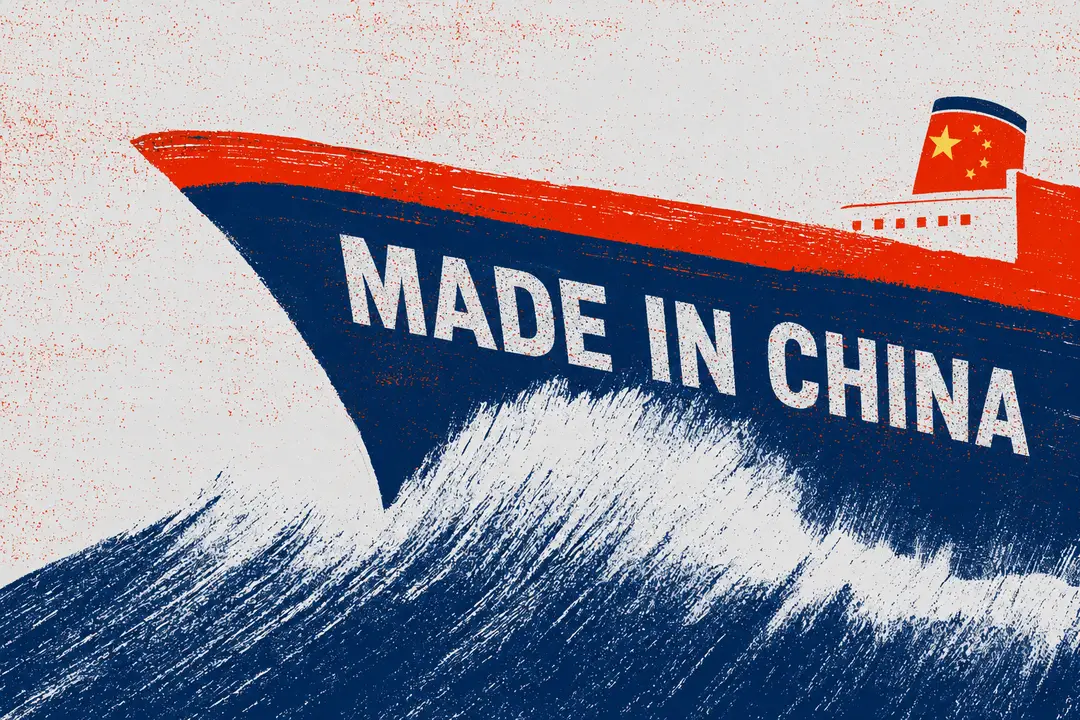
Feature photo: Illustration by Mid Journey and ChatGPT.
Sources