
By Li Dongyang
Richard Liu, the billionaire founder of JD.com, who long seemed content to anchor his empire in the safe harbors of e-commerce and logistics, appears to have made an unexpected strategic pivot into the mobility sector.
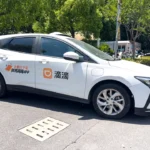
In recent weeks, Liu has unveiled a two-pronged initiative: a partnership with Deepal Auto, the electric vehicle brand of state-owned Changan Automobile, to launch a mass-market EV and a push into the crowded ride-hailing fray with a new service Open Departure. The twin offensive raises an obvious question: why enter such a fiercely competitive and structurally challenged market?
China’s ride-hailing sector is already saturated. Dominated by DiDi Global, with second-tier players such as Caocao Mobility and Ruqi Mobility struggling to narrow losses, the industry is marked by oversupply, thin margins and intense price competition. More than 300 platforms handled 892 million orders nationwide in October 2025 alone, yet growth has largely stalled, turning the sector into a zero-sum game.
For drivers, the economics are increasingly unforgiving. Average monthly income stands at around 7,600 yuan ($1,050) before costs, according to industry surveys, while utilisation rates in major cities remain strikingly low. In Chengdu, fewer than 40% of vehicles are effectively used; in Guangzhou, only half of registered drivers are active on a daily basis. High churn underscores the strain: more than three-quarters of new drivers leave within six months.
Shaking up the ride-hailing morass
Passengers, too, are feeling the effects. As platforms compete primarily on subsidies and commission rates rather than service quality, the user experience has deteriorated. The sector, long likened to a fallback job for middle-aged workers, is increasingly defined by what Chinese commentators call involution — a race to the bottom that benefits neither drivers nor consumers.
It is precisely this stagnation that Liu appears to be targeting. His track record suggests a willingness to disrupt entrenched industries by addressing structural pain points. Last year, JD.com’s surprise push into food delivery — complete with Liu personally making deliveries and hosting couriers for meals — challenged the long-standing duopoly of Meituan and Ele.me.
The mobility play follows a similar logic but with a distinct twist. Rather than adopting the standard aggregator model — pooling third-party drivers — JD.com is entering from the supply side. Its partnership with Deepal gives it direct access to vehicles, allowing the company to build what it describes as a “direct connection” model between automaker and platform.
This “e-commerce plus automaker” approach aims to integrate the entire vehicle lifecycle into JD.com’s ecosystem. Consumers will be able to buy a Deepal car via JD’s platform, book test drives or short trips through Open Departure, and access maintenance, charging and after-sales services through JD’s nationwide network of more than 1,900 automotive service outlets.
The advantages are clear. By controlling vehicle supply, JD.com can standardise quality and reduce operating costs, while leveraging its vast user base—now exceeding 700 million annual active customers—to drive demand without heavy marketing spend. A simple in-app ride-hailing entry point could convert existing e-commerce traffic into mobility users almost instantly.
From stagnation to disruption
The model also hints at longer-term ambitions. Liu was an early investor in Shanghai-based EV maker Nio in 2015 and in 2025 JD.com applied for the trademark Joy Robotaxi, suggesting a strategic interest in autonomous driving. Integrating mobility services today could lay the groundwork for future deployment of self-driving fleets.
For JD.com, the push into mobility is about more than diversification. Liu has openly described the past five years as a period of stagnation for the company, marked by limited innovation and intensifying competition from rivals such as Pinduoduo and Douyin, both of which have made significant inroads into online retail.
Since returning to a more hands-on leadership role, Liu has sought to reinvigorate growth. JD.com reported a 13% jump in revenue to 1.31 trillion ($192 billion) in 2025, with its active user base surpassing 700 million for the first time. The company has also expanded into a wide array of sectors — from smartphones and automotive services to travel, food delivery and now ride-hailing — underpinned by a common strategy of leveraging its supply chain capabilities.
“Companies must take risks to innovate,” Liu has said, acknowledging that not all initiatives will succeed. But failure to experiment, he argues, guarantees stagnation.
Whether Open Departure can gain traction in such a crowded market remains to be seen. Yet Liu’s entry alone may prove disruptive. By linking e-commerce infrastructure with automotive manufacturing, JD.com is not merely launching another ride-hailing platform, it is attempting to reshape the industry’s underlying economics.
At a time when competitors remain locked in a cycle of subsidy-driven competition, Liu is betting that a new model built on integration rather than aggregation can redraw the boundaries of China’s mobility market.
Source:
The Investor (投资家)