China’s largest listed foundation model developer extended a sharp sell-off after a recent share placement as investors focus on expiring lock-ups and intensifying competition.
By Lei Jianping
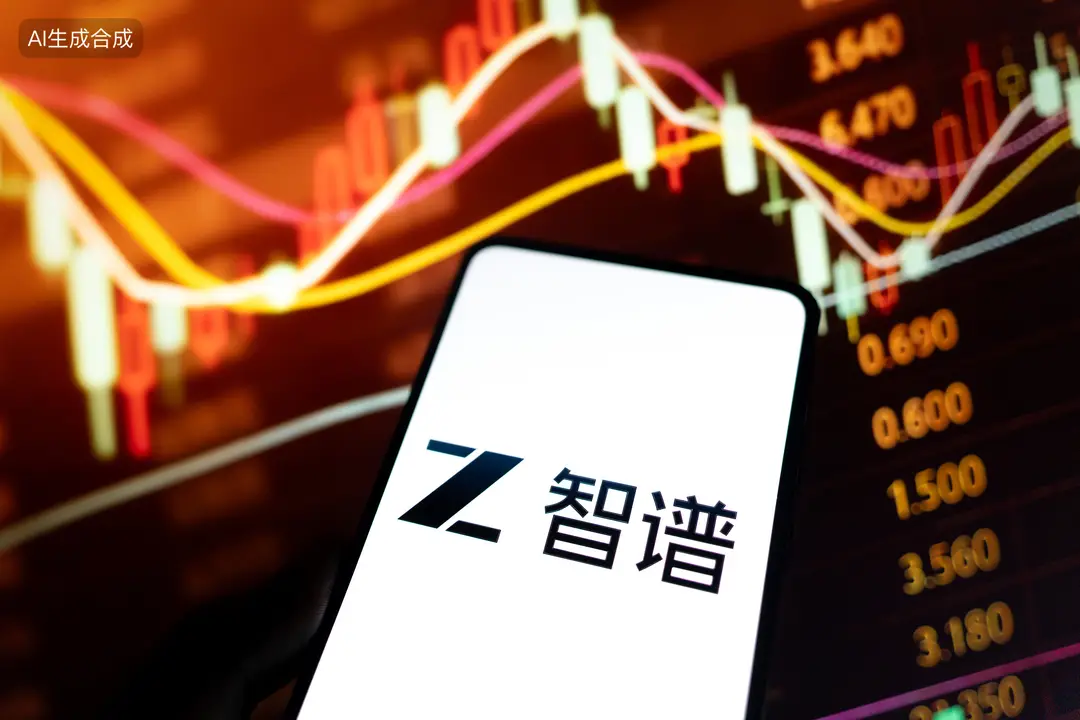
Shares in Chinese artificial intelligence company Z.AI (Zhipu AI) (2513.HK) extended their steep decline on Monday, wiping more than HK$300 billion ($38.3 billion) from the company’s market value over two trading sessions as investors weighed the impact of expiring lock-up periods and rising competition in China’s fast-moving foundation model market.
Z.AI’s Hong Kong-listed shares fell 19.6% on Monday after tumbling 28% on Friday. The stock closed at HK$890.50, down HK$216.50 from the previous session, leaving the company with a market capitalization of HK$414.6 billion.
Placement investors under water
The sell-off comes just one week after the company, formerly known as Knowledge Atlas Technology, completed a HK$31.4 billion share placement that involved the sale of 19.78 million shares at HK$1,588 each, raising net proceeds of HK$31.375 billion after expenses.
Based on Monday’s closing price, investors who participated in the placement are sitting on paper losses of about 44%.
The identities of investors that bought shares in the placement have not been publicly disclosed, leaving market participants uncertain about who was willing to invest at what proved to be the stock’s recent peak.
Z.AI listed in Hong Kong on Jan. 8, 2026, selling 37.42 million shares at HK$116.20 each, raising a net HK$4.17 billion after listing expenses. The company billed itself as the world’s first publicly listed large language model developer.
Lock-up expiry adds pressure
Market sentiment has also been affected by the expiry of post-listing lock-up restrictions for some early investors.
Although some cornerstone investors have pledged not to rush into selling their holdings, market observers note that such commitments do not necessarily mean shares will not eventually come onto the market.
According to the company, 11 cornerstone investors subscribed to a combined HK$2.98 billion worth of shares during the IPO. They included investment funds affiliated with Beijing Financial Holdings, JinYi Capital, Perseverance Asset Management, Shanghai Gao Yi, WT Asset Management, Taikang Life Insurance, GF Fund Management and 3W Fund Management.
Z.AI’s market value has retreated sharply since the lock-up period expired. At one point, the company was valued at around HK$1 trillion. The current market capitalization represents a decline of roughly 60% from that peak.
Despite the recent correction, IPO cornerstone investors remain up around 666% on paper based on the current share price, potentially giving them a strong incentive to realize gains.
At HK$890.50 per share, one standard board lot costs close to HK$90,000, making the stock inaccessible to many retail investors.
Competition intensifies
The sharp decline also comes as China’s foundation model developers continue to raise large sums of capital while competing aggressively on model performance.
Moonshot AI recently released its Kimi K3 model, which the company says has 2.8 trillion total parameters using a mixture-of-experts architecture and supports a one million-token context window. The model targets software development, complex knowledge work and long-running AI agent applications. Moonshot AI has raised more than $3 billion over the past year.
Meanwhile, DeepSeek recently completed a 50 billion yuan financing round at a valuation of 350 billion yuan. Founder Liang Wenfeng participated in the fundraising alongside investors including Tencent, CATL, NetEase, JD.com, IDG Capital and the state-backed National AI Industry Investment Fund.
DeepSeek is in discussions with additional investors for another financing round at a pre-money valuation of about $71 billion, equivalent to roughly 480 billion yuan.
Zhipu is not the only listed Chinese AI company under pressure.
Shares of MiniMax (0100.HK), which also listed this year, fell 10.6% on Monday to HK$193.10, leaving the company with a market capitalization of HK$67.4 billion.
MiniMax recently completed a HK$16 billion financing that combined a share placement and bond issuance. The equity placement sold 35.6 million shares at HK$268 each, raising net proceeds of about HK$9.44 billion.
Source:
Leidi.com