

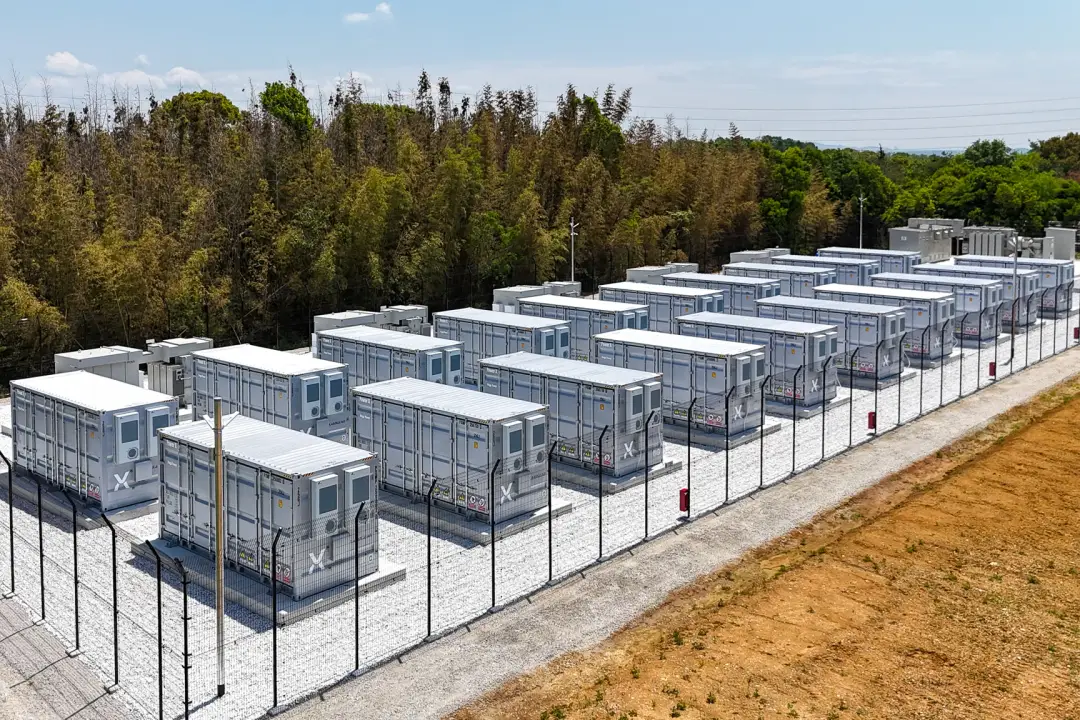
Japan’s lucrative energy storage market is quietly freezing out Chinese technology even as AI demand surges and grid bottlenecks worsen.
By Da Cheung
Japan is experiencing an investment boom in energy storage, transforming into one of the most lucrative markets globally for the technology. However, amid rising geopolitical tensions, Japan is effectively blocking Chinese manufacturers from supplying integrated, grid-connected battery systems by withholding a new cybersecurity certification that companies will be required to obtain by 2027.
Driven by a highly fragmented national grid, a growing share of renewable energy, and the intense power demands of new artificial intelligence data centers, the sector offers highly attractive double-digit returns.
This rapid growth is colliding with severe structural bottlenecks that threaten to stall deployment, even as the country reshapes how it sources its critical energy infrastructure.
A fragmented grid and AI demand
Japan is the world’s fourth-largest power market, but its grid has a unique vulnerability. The country operates ten regional grids, each run by a different utility, and they are split between two frequencies — 50Hz in the east (Kanto) and 60Hz in the west (Kansai) — with only weak interconnections between them. Tokyo, which accounts for over 20% of Japan’s total installed capacity, has about 90 gigawatts of generating capacity, yet roughly 10% of its power must come from outside the region. The tie-line connecting Tokyo to the neighboring Tohoku grid can carry just 3 gigawatts and is perpetually maxed out.
This “island-style” grid requires significant energy storage to remain stable, especially as variable wind and solar power now make up more than 20% of Japan’s energy mix. Adding to the strain, AI data centers and semiconductor factories are expected to add up to 5.38 gigawatts of new power demand by 2030.
Following policy reforms in 2024 that allowed independent storage projects to connect to the grid, investors have flocked to the market. Returns are primarily generated through frequency regulation — a service where batteries rapidly charge or discharge to keep the grid’s electrical frequency stable and prevent catastrophic blackouts. This service accounts for 60% to 70% of storage revenue in Japan. The stakes for frequency control are high; a 2025 blackout in Spain caused by frequency failure resulted in over 1 billion euros in damages. Additional revenue comes from capacity markets, where facilities are paid simply for being available, and peak-valley arbitrage, which involves buying cheap electricity during low demand and selling it when prices peak.
To capitalize on this, domestic utilities are expanding aggressively. Tokyo Gas recently doubled its battery storage target to 2 gigawatts, to be reached in the early 2030s. The utility recently signed a 20-year agreement to buy power from a Fukushima storage project, which is scheduled to begin commercial operation in 2029.
Geopolitics and the Chinese technology workaround
As the market grows, Tokyo is also moving to secure its critical infrastructure. Starting in fiscal 2027, battery control systems connected to Japan’s grid will require a new cybersecurity certification known as JC-STAR.
Japanese regulators evaluate whether manufacturers could be compromised by foreign laws, and industry analysts note that China’s 2017 National Intelligence Law makes it difficult for Chinese vendors to pass the screening.
According to Nikkei, no major Chinese battery suppliers had obtained this certification as of late June 2026. The South China Morning Post reported in June that Chinese battery manufacturer CALB Group had signed a 220-megawatt-hour system procurement agreement for grid-side storage and data center backup in Japan. This could be one of the last major Chinese energy storage deals in Japan in the near future.
Chinese battery makers have criticized Japan’s certification requirement as a de facto ban, although Japan’s Ministry of Economy, Trade and Industry maintains that decisions are based on security assessments, not the provenance of the applicant. Even so, the move aligns with broader efforts by U.S. allies to scrutinize Chinese technology, and follows Japan’s own struggles with Chinese export controls on rare earth elements, according to Reuters.
Despite the regulatory hurdles, Chinese technology remains deeply embedded in Japan’s grid through a supply chain workaround. Japanese companies in the power industry such as PowerX and Daihen are importing “dumb” Chinese battery cells — the physical batteries themselves — which bypass cybersecurity rules because they lack communication capabilities. The firms then build the sensitive, internet-connected control systems locally to obtain certification.
Bottlenecks ensure high returns
Although the financial incentives and supply chain workarounds are in place, the energy storage sector faces a severe structural bottleneck that threatens to stall deployment.
Over the past two years, Japan has only installed about 1 gigawatt of new storage capacity. Meanwhile, nearly 200 gigawatts of proposed projects are backlogged, waiting for grid connection approvals. By comparison, China installed 66.43 gigawatts of new storage capacity in 2025.
This massive mismatch between rigid demand and constrained supply means that the few energy storage projects that do manage to clear regulatory and infrastructure hurdles will likely continue to see lucrative returns for the foreseeable future as the market’s overall expansion moves at a crawl.
Sources