

By Da Cheung
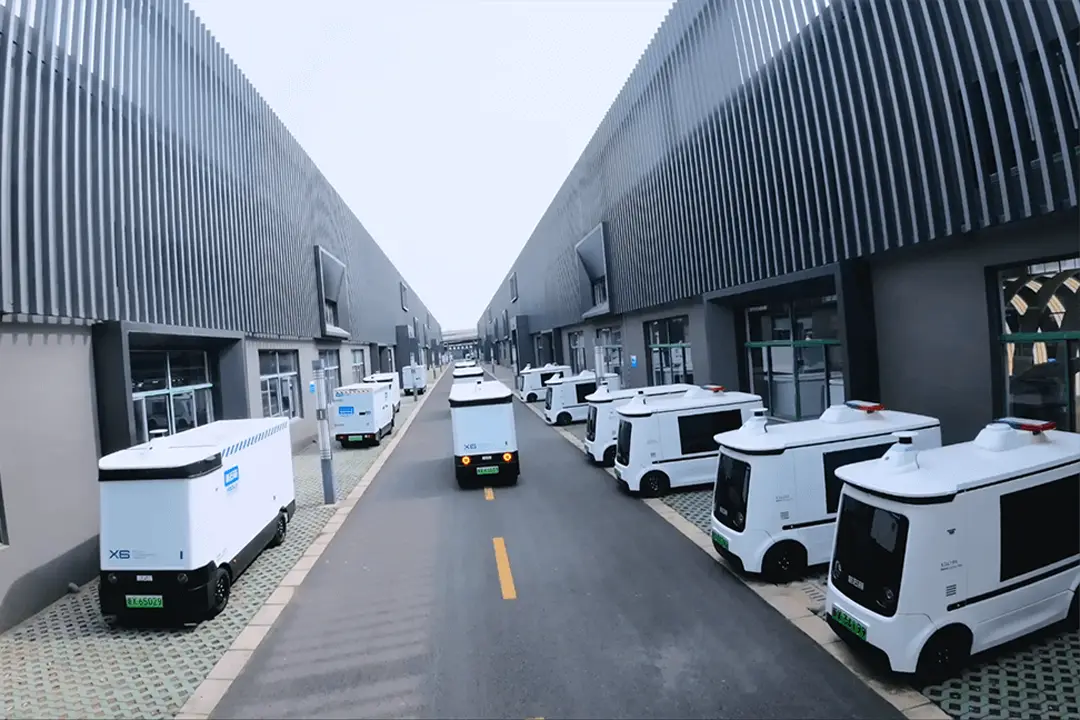
The hardest part of running a thousand driverless delivery vans isn’t the AI. It’s keeping them charged, parked, and out of trouble without hiring a small army of human handlers. Beijing-based Neolix, a leading developer and manufacturer of autonomous delivery vehicles, has just unveiled a solution: Tide-Island, a fully automated charging and operations hub co-developed with Chinese EV charging provider TELD. The facility, in the eastern coastal city of Qingdao, is designed to let a massive fleet recharge, park, and redeploy itself with zero human intervention—a critical piece of infrastructure that most autonomous vehicle companies have only talked about, never built.
The hub is aimed at serving the unmanned delivery operation launched in Qingdao last year by Neolix and Didi Freight, the logistics arm of Chinese ride-hailing giant Didi Global. Today, the fleet has grown to over 1,200 autonomous vans and according to Neolix, that makes the city home to the world’s largest concentration of autonomous delivery vehicles.
Tide-Island highlights how China’s autonomous delivery sector is shifting from flashy demonstrations of self-driving technology toward the far more difficult task of building the infrastructure needed for large-scale commercial deployment. For years, the industry was defined by eye-catching prototypes and ambitious promises. But as autonomous driving systems have matured — aided by falling sensor costs driven by China’s brutal electric-vehicle price wars — the key bottlenecks have become physical and bureaucratic rather than technological. Companies must now solve problems ranging from vehicle charging and parking to city regulation, traffic disruption and public acceptance.
The scale of the Qingdao deployment matters because it allows operators to begin achieving economies of scale, lowering operating costs while collecting vast amounts of real-world driving data. But it is also exposing the social frictions that come with integrating slow-moving robotic vehicles into crowded urban streets.
A Qingdao resident told The Insight Asia that the city’s streets are now peppered with these slow-moving delivery vans, which often trap long queues of human-driven cars behind them—especially frustrating during rush hour.
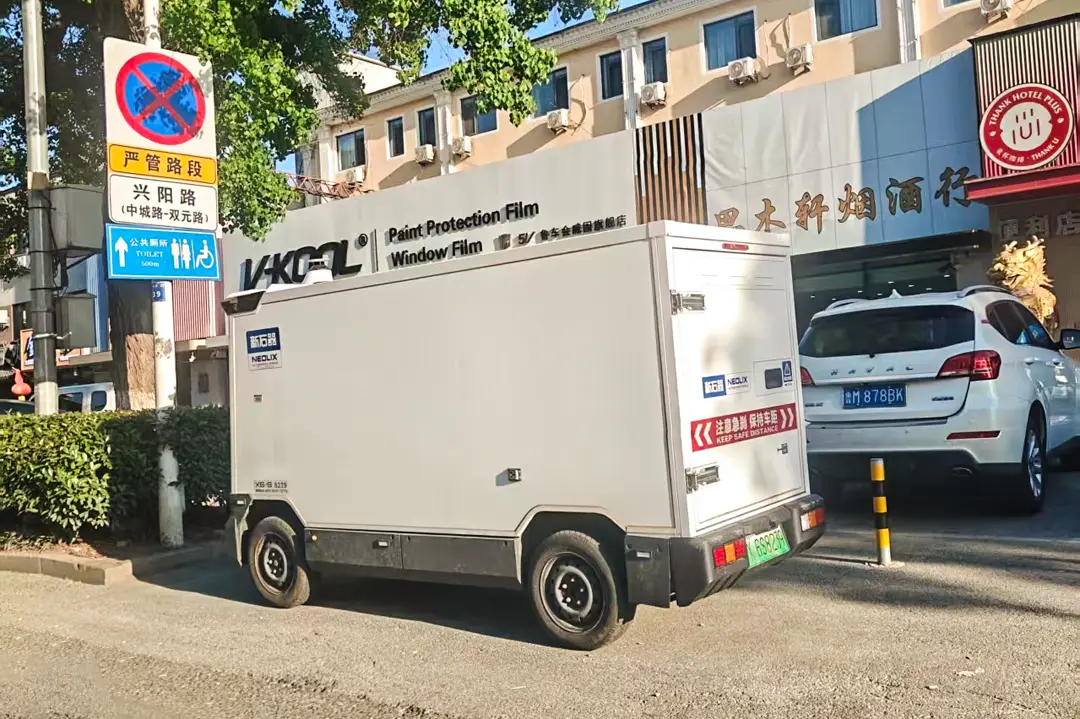
A Neolix robovan parked in a Qingdao street.
The ‘easy to build, hard to operate’ dilemma
The current state of China’s autonomous delivery market echoes the growing pains of other rapidly expanding sectors, such as the electric vehicle industry or the early bike-sharing craze. The prevailing consensus is a dynamic of “easy to build, hard to sell and operate.” The core autonomous driving technologies have largely met practical demands, but market cultivation and the deployment of supporting infrastructure remain formidable challenges.
From a manufacturing standpoint, building a low-speed autonomous cart is relatively straightforward today, especially given China’s mature automotive supply chains. But integrating them into existing business models takes time. According to an analysis by Huxiu, Neolix built a factory with a 10,000-unit capacity back in 2019, yet it took three years of pilot programs before traditional logistics giants were convinced of the benefits of robovans.
The recent explosion in the market is largely a result of plummeting hardware costs. The industry historically struggled with profitability because vehicles relied on LiDAR — an expensive sensor system that uses laser pulses to map physical environments in 3D. However, as the passenger car market engaged in a fierce price war over Advanced Driver Assistance Systems (ADAS), the cost of these sensors dropped significantly. Much of this hardware transition was spearheaded by Hesai Technology, a sensor manufacturer that leveraged its massive automotive production scale to supply affordable LiDAR to major delivery fleets.
Today, companies are retrofitting these automotive-grade ADAS sensors onto delivery carts. This cost dividend has allowed startups to lower the price of a bare delivery vehicle to around 15,000 yuan ($2,080), accompanied by a monthly software and service fee of about 1,800 yuan, according to Late Post. This affordability has attracted billions of yuan in venture capital and lured established automotive supply chain companies, such as Desay SV and Minieye, into an increasingly crowded and fiercely competitive market.
Yet, managing these vehicles efficiently is incredibly complex. According to Node Finance, vehicle charging and parking alone account for 20% to 30% of total operating costs. According to Neolix, Tide-Island was built to automate this operational nightmare. It can accommodate up to 100 vehicles and fast-charge 90 vehicles per hour without human intervention.
The gap between marketing and reality
While the technological and manufacturing barriers are lowering, the true obstacles lie in regulatory openness and public infrastructure. The industry is currently dominated by two startups: Neolix, which commands a 51.6% market share, and Jiushi Intelligent — backed by Alibaba’s Cainiao logistics arm — holding 32.3%, according to data compiled by iResearch.
With official state support, Neolix and Jiushi Intelligent have obtained rights of way in more than 200 cities, while Beijing-based White Rhino, whose major logistics partners include leading logistics provider SF Express (Shunfeng) and e-commerce giant JD.com, has secured rights in nearly 150 cities and regions. But while unmanned driving and delivery companies frequently boast about the sheer number of cities they have entered, the reality on the ground is that many of those only open up very small, tightly controlled testing zones.
Unmanned delivery vehicles have yet to receive formal identity confirmation within China’s legal traffic regulations. The autonomous vans on the roads are still officially classified as being in the testing phase. Out of concern for the limitations of current technology and the potential for traffic management conflict — perfectly illustrated by the frustrated human drivers in Qingdao — local governments put strict limits on the number of license plates they issue. Food delivery platform Meituan has completed 5.5 million orders using its autonomous ground vehicles to train its AI models, yet a full-scale, city-wide commercial rollout remains constrained by these municipal limits, according to Power Plant.
Why drones remain grounded
While ground-based delivery faces traffic and regulatory friction, the once-highly anticipated airborne alternative — drone delivery — is facing its own roadblocks.
For a decade, companies globally have hyped the prospect of using drones to bypass congested streets and drop consumer goods from the sky. Yet, large-scale application remains elusive. The core issue is the immense cost of infrastructure and the lack of operational efficiency in complex urban environments.
Unlike a human courier — or a ground-based autonomous van — that can carry multiple orders and dynamically reroute on the fly, a drone typically executes a single task. It flies to a destination, drops a single package, and returns. To make this work in densely populated urban areas, operators must construct dedicated landing pads, safety barriers, and charging facilities. A single landing node can cost tens of thousands of dollars. User demand is often too dispersed to cover the depreciation of these assets.
More importantly, strict aviation policies stifle expansion. For example, Beijing has implemented a blanket ban on unauthorized drone flights across the city. If a logistics or food delivery company attempts to apply for routine commercial flight permissions in such heavily regulated airspace, securing approval is expected to be incredibly difficult. Consequently, drones have been largely relegated to closed parks and medical transport, rather than the high-frequency retail network originally envisioned.
Ultimately, the future of unmanned delivery hinges not on building smarter vehicles, but on embedding them seamlessly into the physical and legal fabric of cities. Autonomous delivery vehicles and drones can even be spotted on the streets of Moscow, but establishing a genuinely practical, massive backend network to generate real economic benefits is a different challenge altogether. Given the influx of capital and top-down policy pilots, China’s megacities are still best positioned to be the first to achieve this — provided they can balance rapid innovation with the patience of the everyday public.
Original Sources